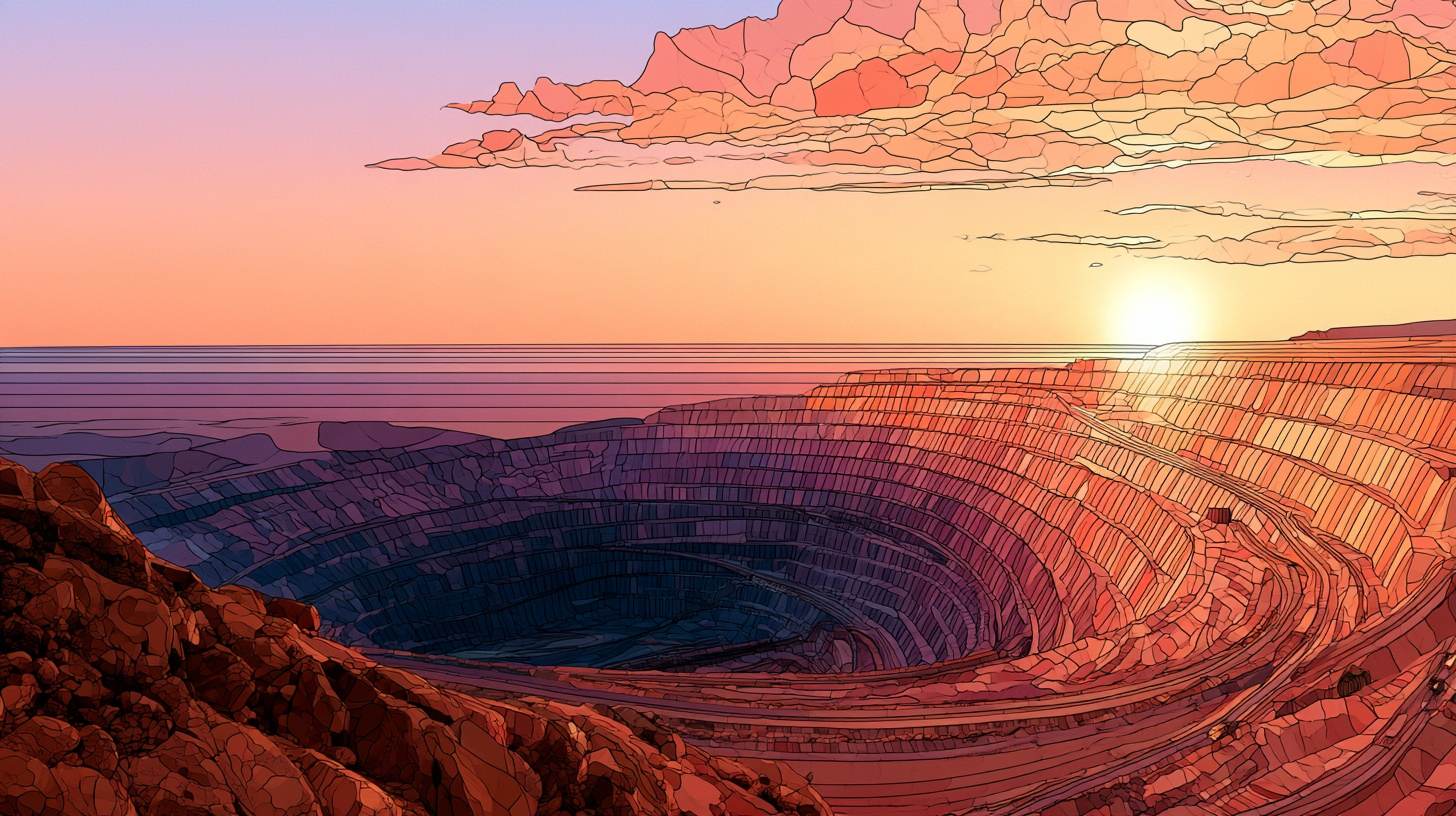
Mining projects in Jordan
Jordan’s mines, the new metals of the south and the rail, terminal, water and power PPPs that link them to the port of Aqaba.
Mining projects in Jordan include the phosphate and potash expansions, new copper and gold agreements in Wadi Araba, rare earths, silica and basalt offered to investors, and a US$2.5 billion freight railway that will carry phosphate and potash to the port of Aqaba. Around them sit the rail, terminal, water, power and processing projects that companies can develop as public-private partnerships (PPPs), and much of this investment sits inside the $46 billion of Jordan’s $86 billion pipeline anchored in Aqaba. This post sets out the projects, the PPP roles open to mining companies and investors, and where to start, drawing on the Mining and Minerals sector guide and the 96 free organization guides on this site.
Why does mining matter to Jordan’s economy?
Mining matters to Jordan because the country ranks fifth in the world for phosphate reserves and is the Arab world’s only potash producer. Mining and mineral industries accounted for about 23% of national exports in 2022, and Jordan’s mines and fertilizer plants supply farms across Asia, with the port of Aqaba as their gateway.
Jordan’s two mineral champions are growing.Arab Potash Company produced a record 2.9 million tonnes of potash in 2025, over 21% more than the year before, and Jordan Phosphate Mines Company extracted more than 12 million tonnes of phosphate in the same year. The national mining strategy for 2024 to 2033 aims to raise mining exports from about US$1.4 billion to US$5 billion, and Jordan signed its first copper mining agreement in 2025.
#5
Jordan’s global rank in phosphate reserves, according to Invest Jordan
What mining projects are planned in Jordan?
Jordan’s mining pipeline runs from new copper and gold in Wadi Araba to rare earths, silica and basalt in the south and east, with a freight railway to Aqaba tying the sector together. The Mining and Minerals sector guide lists 29 projects from the Jordan PPP project register, from early exploration areas to works already under way.
- 01Aqaba, Al-Shidiyeh and Ma’an Railway. Under way. A US$2.5 billion freight railway of 403 km, developed by the Jordan-UAE Railway Company to carry phosphate and potash to the port, with ground broken on October 5, 2026.
- 02Abu Khashiba Gold and Copper. Under way in Wadi Araba. A 30-year copper agreement south of the Dead Sea, with drilling under way, a pilot copper plant being built and first resource estimates presented in October 2026.
- 03Wadi Khaled and Wadi Al-Nuhas Copper Mine. Awarded. Jordan’s second executive copper agreement, signed in October 2026, with mining planned underground to protect the landscape.
- 04Rare earth elements. Open opportunity. Exploration for rare earths with tin, zirconium and niobium in the south, with metal areas at Jabal Bir Tanak, Wadi Imran, Wadi Lubnan and Wadi Mubarak, all close to Aqaba port.
- 05Silica sand. Pipeline. High-purity silica at Ras En Naqb and Wadi Es Siq for glass, silicon chemicals and ceramics, with a concession for a dedicated silica export terminal at Aqaba tendered in 2026.
- 06Basalt. Open opportunity. Basalt from a volcanic plateau in Mafraq and Zarqa, offered for quarrying and processing into rock wool insulation and cast basalt.
Fertilizer and chemical plants turn this rock into products with more value per tonne. The Fertilizers and Chemicals sector guide lists a US$1.5 billion Arab Potash plant at Ghor Al-Safi for 1 million tonnes a year of potassium chloride, and a US$1 billion fertilizer complex at Eshidiya and Aqaba, incorporated in July 2026 by JPMC, Arab Potash and the Social Security Investment Fund, with about 700 direct jobs.
How does Aqaba fit into Jordan’s mining projects?
Aqaba is where Jordan’s minerals meet the sea. Phosphate, potash and other bulk minerals travel to the port in Aqaba for export, and the mining sector guide places much of the sector’s investment inside the $46 billion of projects anchored in Aqaba, where the port, the base-metal areas east of the city and the new terminals meet.
$46B
of Jordan’s $86 billion of PPP and infrastructure projects are anchored in Aqaba, where the mineral railway, the silica export terminal and the fertilizer terminals meet the port
The freight railway links the southern mines to the port and will carry about 16 million tonnes of phosphate and potash a year. The Fertilizers and Chemicals guide adds the port’s fertilizer terminals and a phosphoric acid plant planned at Aqaba, and expects the first specialty fertilizers to ship from Aqaba by 2030. Potash and fertilizer stocks held at Aqaba could also carry digital warehouse receipts that buyers and banks can finance and trade.
Organizations based in the city can take part through the guide for organizations in AqabaDownload the guide, and the Ports and Logistics sector guide covers the freight railway with the terminals and dry ports it serves.
What PPP projects can mining companies in Jordan develop?
Mining companies in Jordan can develop the rail, port terminals, water, power and processing that mining needs as PPP projects and anchor them with their own mineral output. The Mining Companies guideDownload the guide proposes a dedicated PPP program for this, starting with Jordan’s $86 billion of projects and the $46 billion anchored in Aqaba.
The guide names five places where a mining company fits in a PPP. As an anchor customer, its long-term freight, handling, water and power volumes give rail, terminal, desalination and energy PPPs the demand lenders look for. As a sponsor, it takes equity in the shared corridors, terminals and utilities its own output depends on. As a supplier, it delivers aggregates, silica and cement raw materials to construction PPPs under long-term contracts. It can also develop fertilizer, chemical and glass plants in processing parks with shared utilities, and bring its heavy fleets and earthworks crews to the tunnels, roads and dams of other PPPs.
A mining company that waits for others to build its corridors pays the tariffs they set.
Mining and processing also need large and steady supplies of water and power. A company can develop desalination, water reuse and solar with storage as PPPs, or join those projects as an anchor customer, so each one is bid with a known demand and the mining operation runs at a known cost. The economic sectors category gathers the guides for mining, energy, water and the other sectors these projects connect.
Can a company propose its own mining infrastructure project in Jordan?
Yes. Article 15 of Jordan’s PPP Law No. 19 of 2023, in effect since November 13, 2023, lets a private company bring its own PPP project to government. A mining company can propose a rail siding or bulk storage yard on the corridor to Aqaba, water reuse for nearby towns or solar with storage for a remote mining area.
The sector guide adds a shared processing plant for copper ore from several small deposits in the south, paid from tolling fees. If the project goes to tender, the proposer keeps the right to match the best offer. PPP Regulation No. 9 of 2024 defines small-scale PPPs below $14.1 million, which can be bundled into one feasibility report and one tender, so similar sidings or water projects can go to market together. The unsolicited proposals page sets out this route for each kind of organization.
A mining research lab, hosted by the Ministry of Energy and Mineral Resources, could test new methods with the phosphate, potash and copper companies through pilots of about $100,000 each: sensor-based ore sorting on copper ore from Wadi Araba, AI targeting of one rare-earth exploration area near Aqaba, and daily drone surveys of a phosphate pit and its stockpiles, with every result published for investors. The small PPPs page explains the method.
How will AI, robotics and tokenization change mining in Jordan?
AI, robotics and tokenization will change how Jordan finds, mines and finances its minerals. AI reads satellite images, geophysics and drill cores to target deposits, autonomous drills and haul trucks work through heat and dust, and tokenized stakes let more investors own part of the rail, terminals and plants that carry minerals to Aqaba.
Along the corridor, one model can plan trains, stockpiles and ship loading from the mines to Aqaba. In the pits, drones map stockpiles every day and sensor-based sorting rejects waste rock early, cutting the water and energy used in processing. For the underground copper mining planned in the south, remote-controlled equipment protects both the workers below and the landscape above.
A mining project, a royalty or a long-term offtake contract pays out for decades, which is what tokenization suits. The sector guide describes exploration stakes that convert into shares if a deposit is proven, tokenized shares in the royalties paid by producing operations, and terminals, sidings and storage owned through tokens and paid from throughput fees. The tokenization page shows what this changes for each kind of organization, and the Vision page explains the infrastructure singularity these assets lead towards.
Where should a mining company in Jordan start?
A mining company in Jordan can start with six steps from the Mining Companies guide: board approval for a PPP program, a named program lead and team, a map of the $86 billion pipeline, the freight, water and power volumes it can commit, partners to complete each consortium, and a first pilot taken from idea to submission.
The pipeline map starts in Aqaba, with the freight railway, the silica export terminal and the fertilizer terminals at the port, and early meetings with the contracting authorities and sponsors behind them. The summary of all 96 guides brings the shared method together, and the starting guide explains PPPs from zero.