Skip to content
Jordan PPP
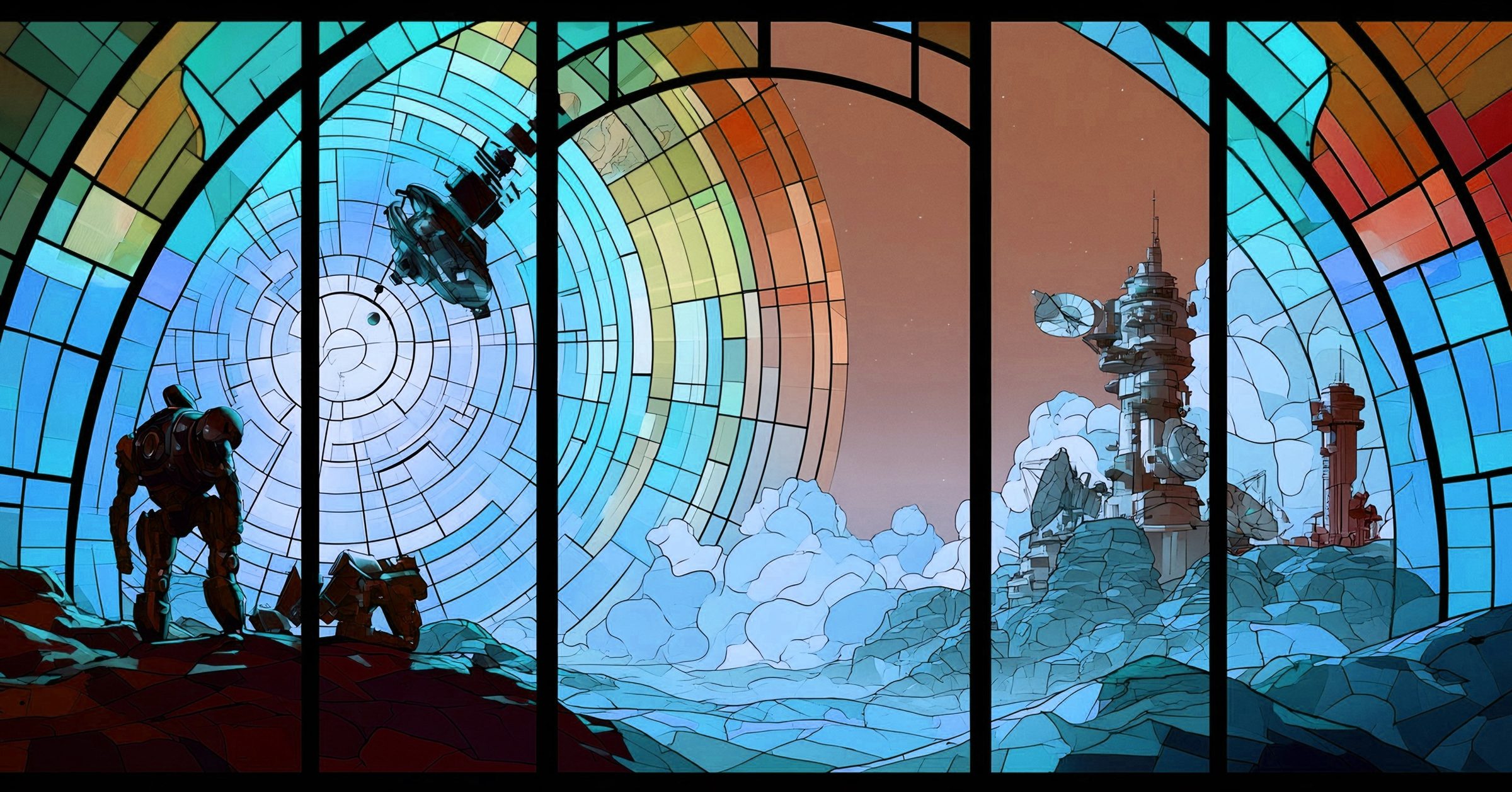
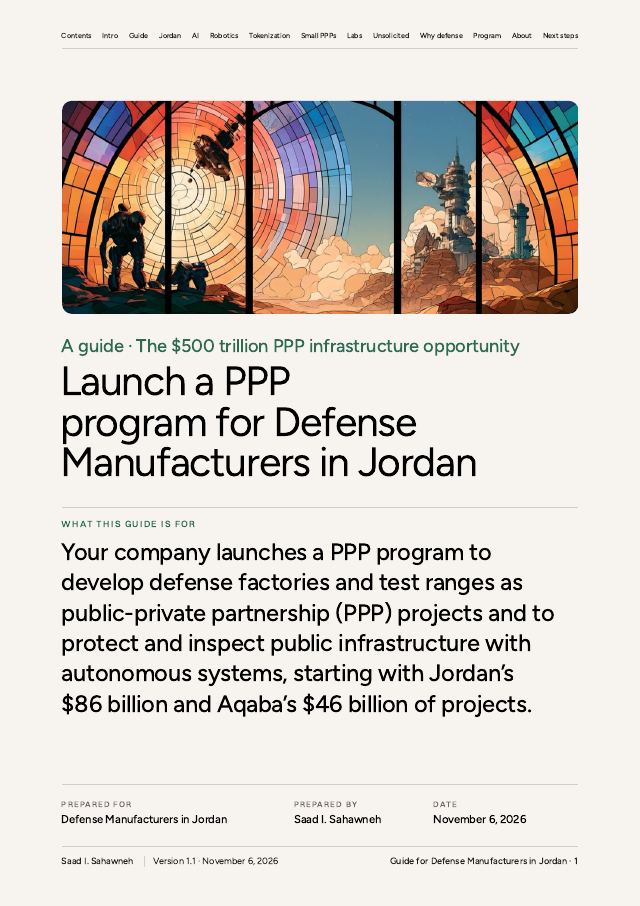
Stained-glass illustration in blue glass of a robot and towers at the dawn of the infrastructure singularity

Sector guide 22 of 23 · Version 1.1

Defense in Jordan

The factories, ranges and machines that protect everything else Jordan builds.

Share
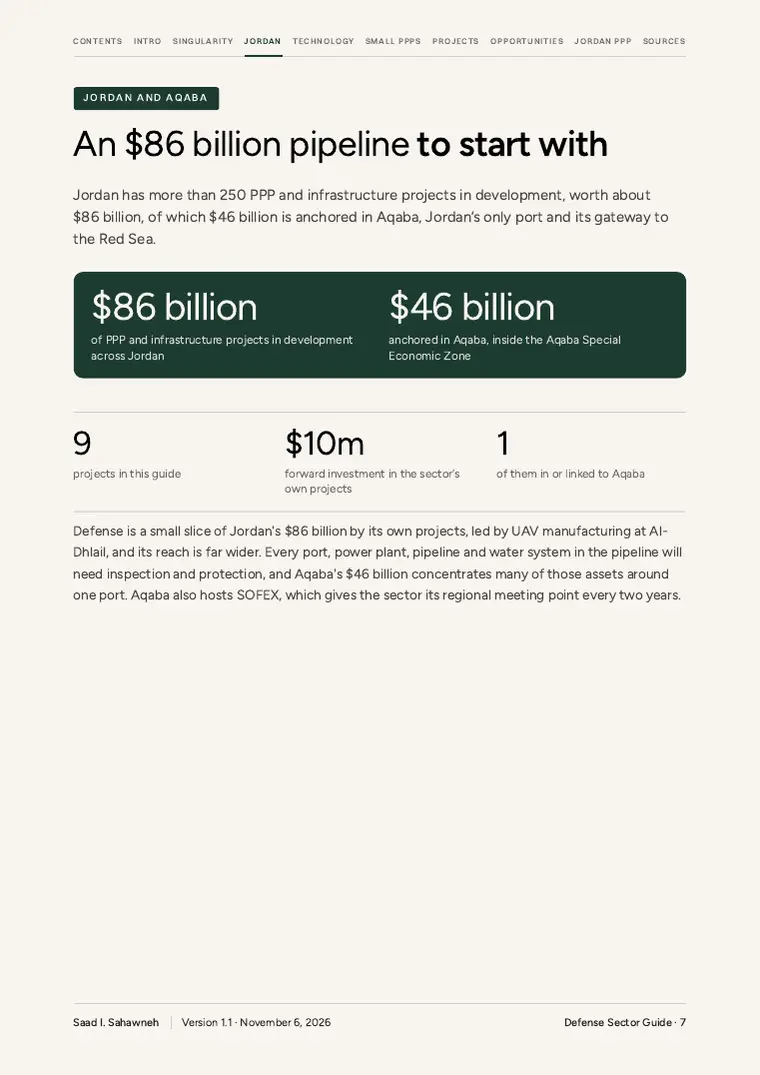
$10m
forward investment in its own projects
9
projects in this sector guide
1
in or linked to Aqaba

The sector today

Defense in Jordan

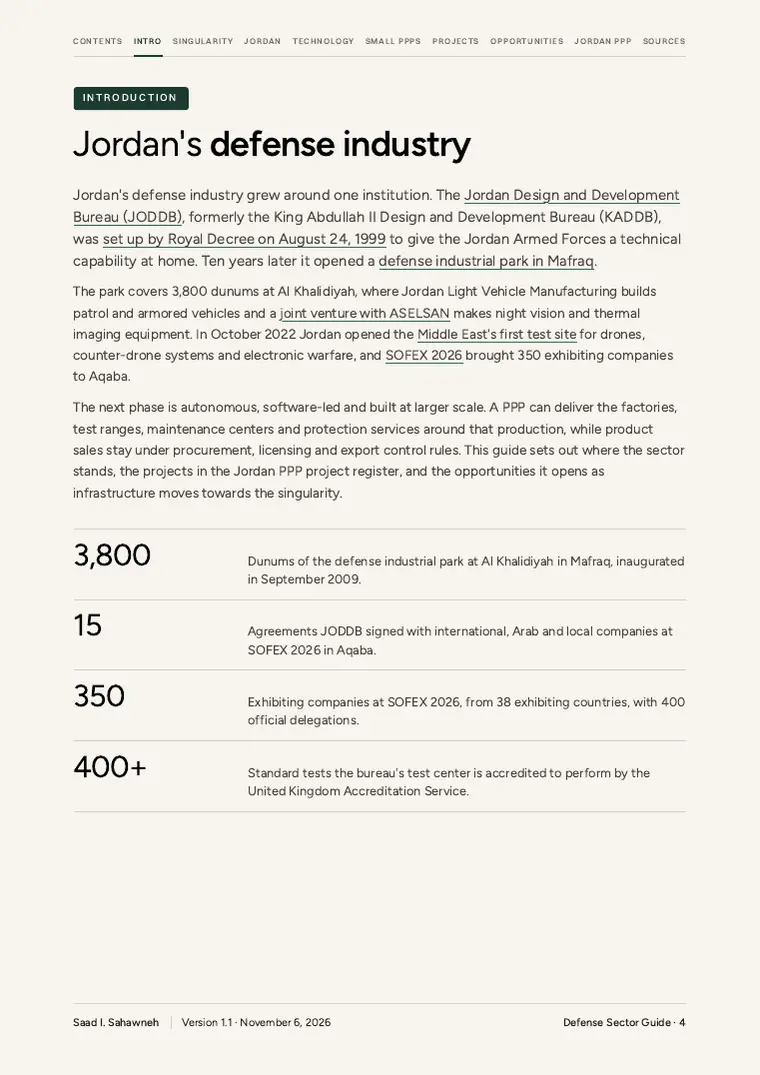
Jordan’s defense industry grew around one institution. The Jordan Design and Development Bureau (JODDB), formerly the King Abdullah II Design and Development Bureau (KADDB), was set up by Royal Decree on August 24, 1999 to give the Jordan Armed Forces a technical capability at home. Ten years later it opened a defense industrial park in Mafraq.

The park covers 3,800 dunums at Al Khalidiyah, where Jordan Light Vehicle Manufacturing builds patrol and armored vehicles and a joint venture with ASELSAN makes night vision and thermal imaging equipment. In October 2022 Jordan opened the Middle East’s first test site for drones, counter-drone systems and electronic warfare, and SOFEX 2026 brought 350 exhibiting companies to Aqaba.

The next phase is autonomous, software-led and built at larger scale. A PPP can deliver the factories, test ranges, maintenance centers and protection services around that production, while product sales stay under procurement, licensing and export control rules. This guide sets out where the sector stands, the projects in the Jordan PPP project register, and the opportunities it opens as infrastructure moves towards the singularity.

3,800
Dunums of the defense industrial park at Al Khalidiyah in Mafraq, inaugurated in September 2009.
15
Agreements JODDB signed with international, Arab and local companies at SOFEX 2026 in Aqaba.
350
Exhibiting companies at SOFEX 2026, from 38 exhibiting countries, with 400 official delegations.
400+
Standard tests the bureau’s test center is accredited to perform by the United Kingdom Accreditation Service.

The singularity

Autonomy that protects the singularity

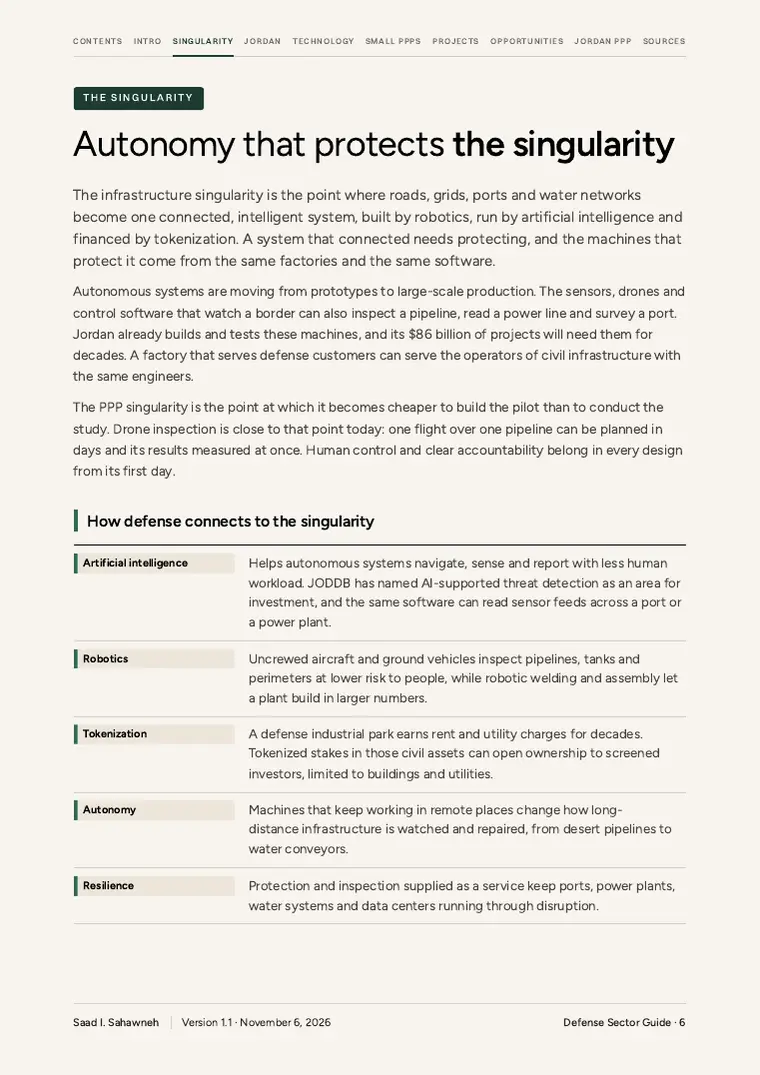
The infrastructure singularity is the point where roads, grids, ports and water networks become one connected, intelligent system, built by robotics, run by artificial intelligence and financed by tokenization. A system that connected needs protecting, and the machines that protect it come from the same factories and the same software.

Artificial intelligence
Helps autonomous systems navigate, sense and report with less human workload. JODDB has named AI-supported threat detection as an area for investment, and the same software can read sensor feeds across a port or a power plant.
Robotics
Uncrewed aircraft and ground vehicles inspect pipelines, tanks and perimeters at lower risk to people, while robotic welding and assembly let a plant build in larger numbers.
Tokenization
A defense industrial park earns rent and utility charges for decades. Tokenized stakes in those civil assets can open ownership to screened investors, limited to buildings and utilities.
Autonomy
Machines that keep working in remote places change how long-distance infrastructure is watched and repaired, from desert pipelines to water conveyors.
Resilience
Protection and inspection supplied as a service keep ports, power plants, water systems and data centers running through disruption.

Flagship projects

The projects that lead the sector

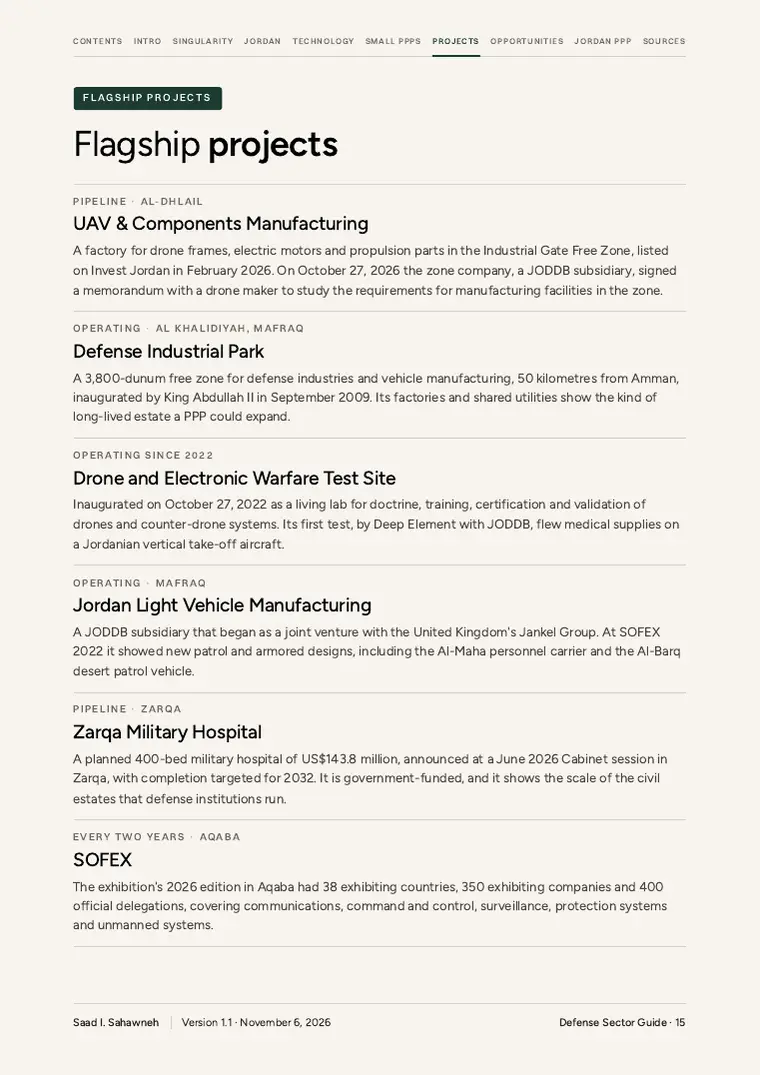
  • Pipeline · Al-Dhlail

    UAV & Components Manufacturing

    A factory for drone frames, electric motors and propulsion parts in the Industrial Gate Free Zone, listed on Invest Jordan in February 2026. On October 27, 2026 the zone company, a JODDB subsidiary, signed a memorandum with a drone maker to study the requirements for manufacturing facilities in the zone.

  • Operating · Al Khalidiyah, Mafraq

    Defense Industrial Park

    A 3,800-dunum free zone for defense industries and vehicle manufacturing, 50 kilometres from Amman, inaugurated by King Abdullah II in September 2009. Its factories and shared utilities show the kind of long-lived estate a PPP could expand.

  • Operating since 2022

    Drone and Electronic Warfare Test Site

    Inaugurated on October 27, 2022 as a living lab for doctrine, training, certification and validation of drones and counter-drone systems. Its first test, by Deep Element with JODDB, flew medical supplies on a Jordanian vertical take-off aircraft.

  • Operating · Mafraq

    Jordan Light Vehicle Manufacturing

    A JODDB subsidiary that began as a joint venture with the United Kingdom’s Jankel Group. At SOFEX 2022 it showed new patrol and armored designs, including the Al-Maha personnel carrier and the Al-Barq desert patrol vehicle.

  • Pipeline · Zarqa

    Zarqa Military Hospital

    A planned 400-bed military hospital of US$143.8 million, announced at a June 2026 Cabinet session in Zarqa, with completion targeted for 2032. It is government-funded, and it shows the scale of the civil estates that defense institutions run.

  • Every two years · Aqaba

    SOFEX

    The exhibition’s 2026 edition in Aqaba had 38 exhibiting countries, 350 exhibiting companies and 400 official delegations, covering communications, command and control, surveillance, protection systems and unmanned systems.

Every project

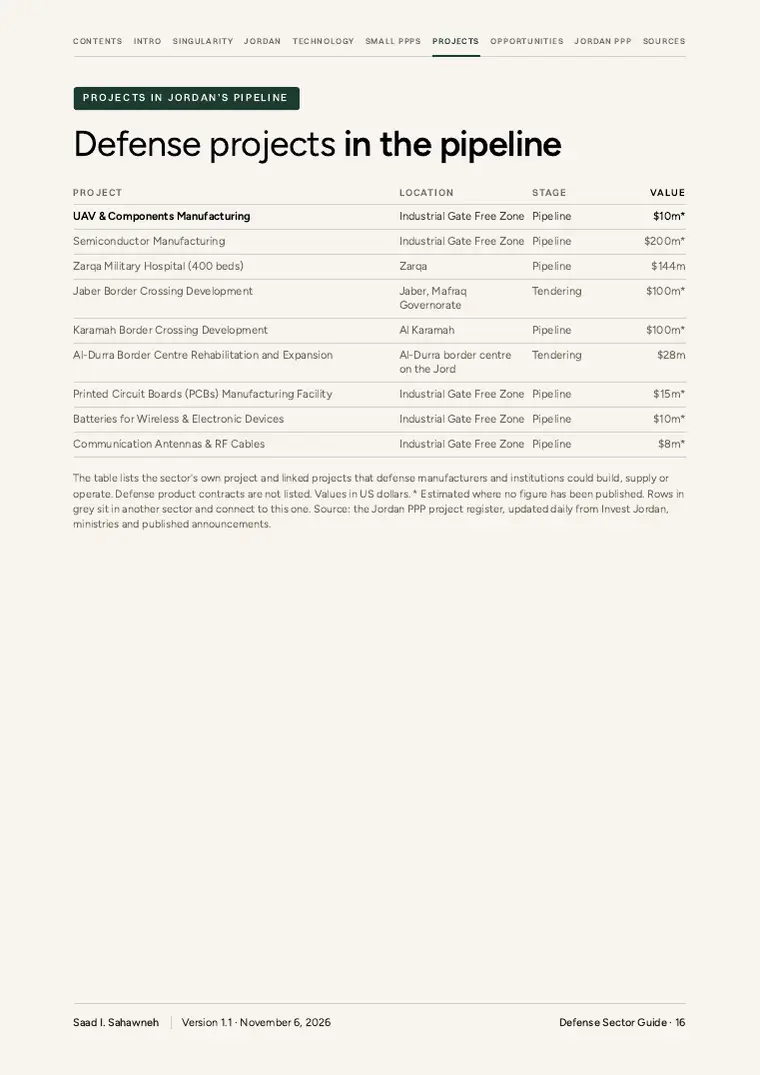
9 projects in Jordan’s pipeline

Values in US dollars; * estimated where no figure has been published. Rows in grey sit in another sector and connect to this one.

ProjectLocationStageValue
UAV & Components ManufacturingIndustrial Gate Free ZonePipeline$10m*
Semiconductor ManufacturingIndustrial Gate Free ZonePipeline$200m*
Zarqa Military Hospital (400 beds)ZarqaPipeline$144m
Jaber Border Crossing DevelopmentJaber, Mafraq GovernorateTendering$100m*
Karamah Border Crossing DevelopmentAl KaramahPipeline$100m*
Al-Durra Border Centre Rehabilitation and ExpansionAl-Durra border center on the Jordan-SauTendering$28m
Printed Circuit Boards (PCBs) Manufacturing FacilityIndustrial Gate Free ZonePipeline$15m*
Batteries for Wireless & Electronic DevicesIndustrial Gate Free ZonePipeline$10m*
Communication Antennas & RF CablesIndustrial Gate Free ZonePipeline$8m*

AI, robotics and tokenization

What changes for defense

Artificial intelligence

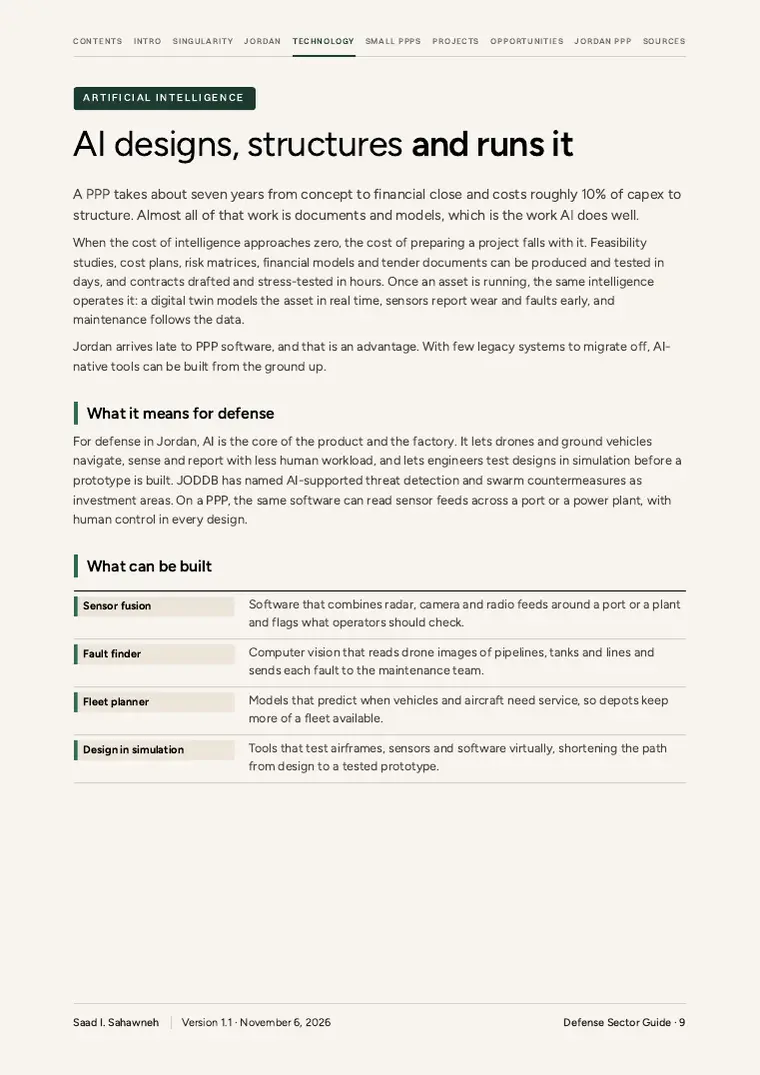
For defense in Jordan, AI is the core of the product and the factory. It lets drones and ground vehicles navigate, sense and report with less human workload, and lets engineers test designs in simulation before a prototype is built. JODDB has named AI-supported threat detection and swarm countermeasures as investment areas. On a PPP, the same software can read sensor feeds across a port or a power plant, with human control in every design.

What can be built

  • Sensor fusion. Software that combines radar, camera and radio feeds around a port or a plant and flags what operators should check.
  • Fault finder. Computer vision that reads drone images of pipelines, tanks and lines and sends each fault to the maintenance team.
  • Fleet planner. Models that predict when vehicles and aircraft need service, so depots keep more of a fleet available.
  • Design in simulation. Tools that test airframes, sensors and software virtually, shortening the path from design to a tested prototype.
More on artificial intelligence

Robotics

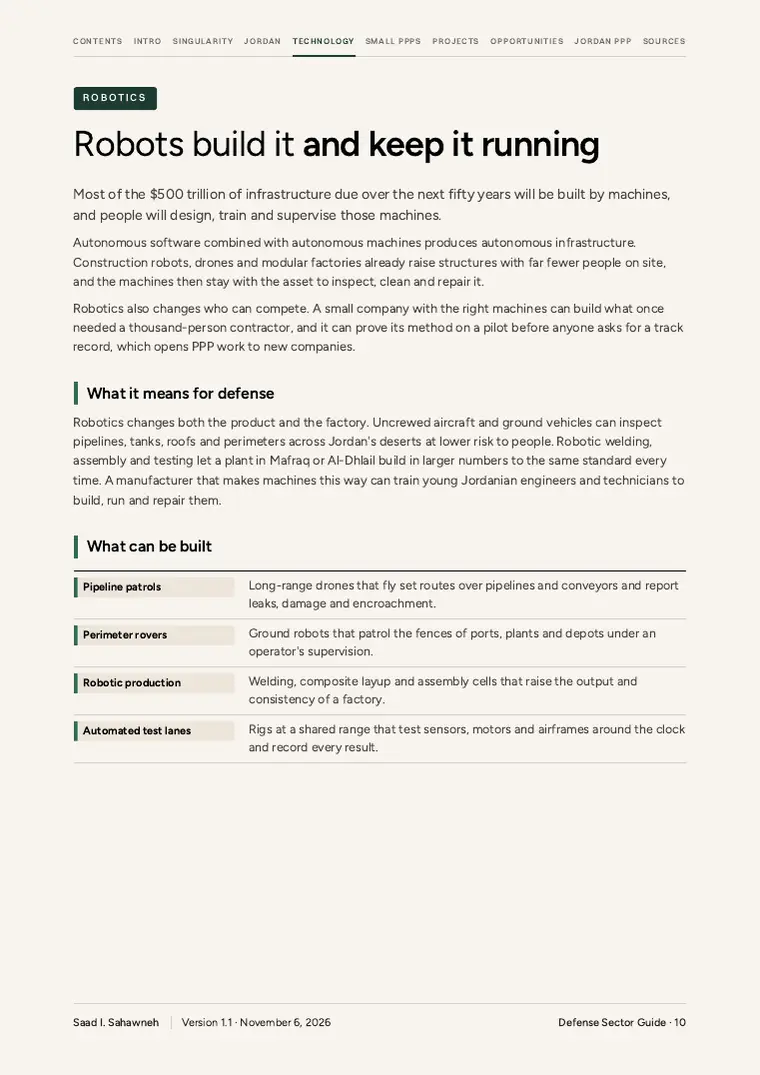
Robotics changes both the product and the factory. Uncrewed aircraft and ground vehicles can inspect pipelines, tanks, roofs and perimeters across Jordan’s deserts at lower risk to people. Robotic welding, assembly and testing let a plant in Mafraq or Al-Dhlail build in larger numbers to the same standard every time. A manufacturer that makes machines this way can train young Jordanian engineers and technicians to build, run and repair them.

What can be built

  • Pipeline patrols. Long-range drones that fly set routes over pipelines and conveyors and report leaks, damage and encroachment.
  • Perimeter rovers. Ground robots that patrol the fences of ports, plants and depots under an operator’s supervision.
  • Robotic production. Welding, composite layup and assembly cells that raise the output and consistency of a factory.
  • Automated test lanes. Rigs at a shared range that test sensors, motors and airframes around the clock and record every result.
More on robotics

Tokenization

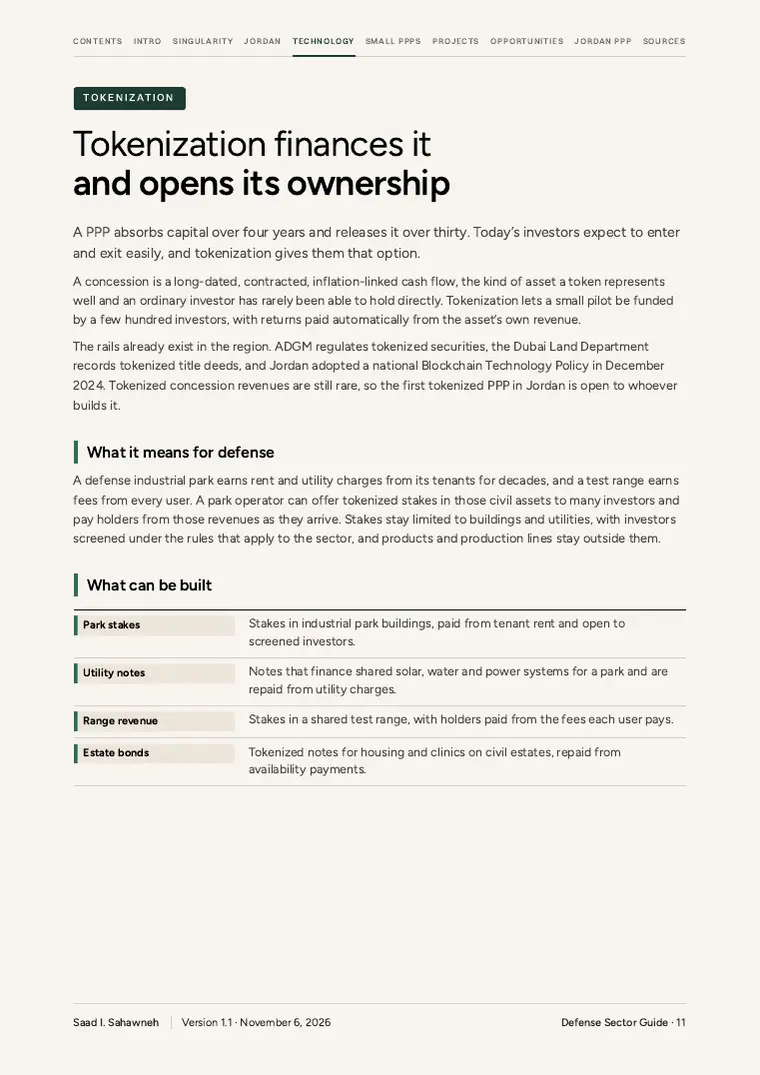
A defense industrial park earns rent and utility charges from its tenants for decades, and a test range earns fees from every user. A park operator can offer tokenized stakes in those civil assets to many investors and pay holders from those revenues as they arrive. Stakes stay limited to buildings and utilities, with investors screened under the rules that apply to the sector, and products and production lines stay outside them.

What can be built

  • Park stakes. Stakes in industrial park buildings, paid from tenant rent and open to screened investors.
  • Utility notes. Notes that finance shared solar, water and power systems for a park and are repaid from utility charges.
  • Range revenue. Stakes in a shared test range, with holders paid from the fees each user pays.
  • Estate bonds. Tokenized notes for housing and clinics on civil estates, repaid from availability payments.
More on tokenization

Start small, or bring your own idea

Small PPPs and unsolicited proposals

Small PPPs and research labs

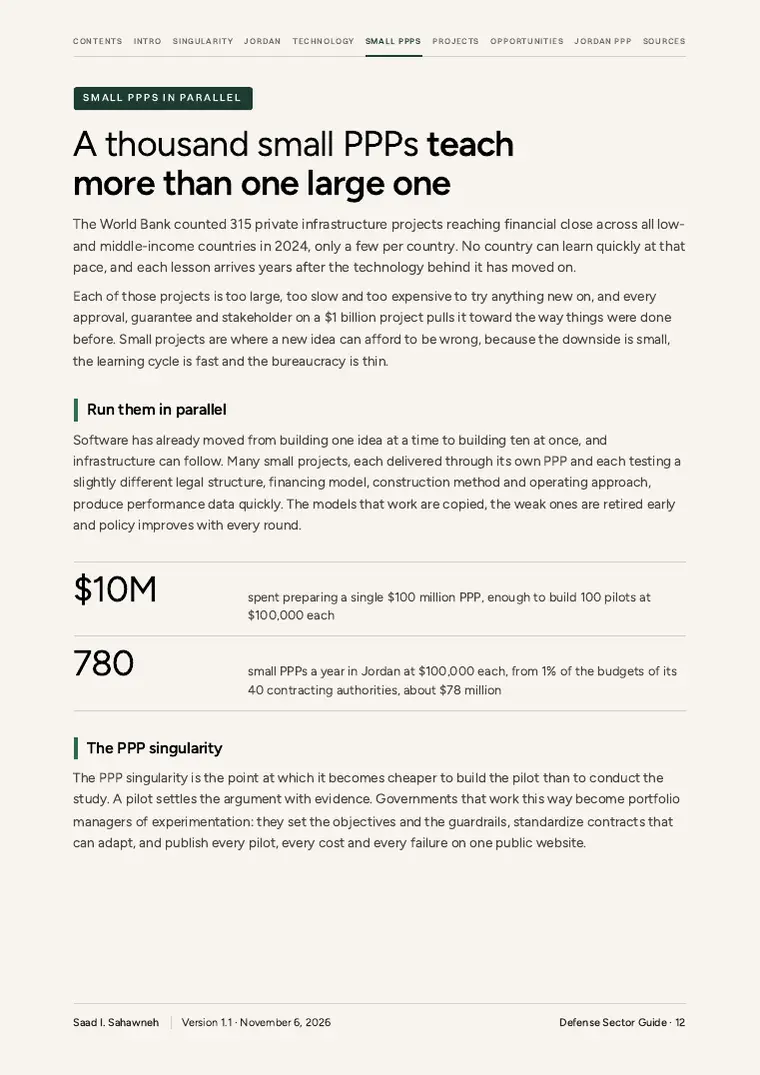
Small PPPs let a manufacturer prove a civil service at low cost. A defense research lab could test three pilots of about $100,000 each: drone inspection of one pipeline section, a sensor network around one water plant, and a shared lane for testing drone motors. The results can be published, and the pilots that work can be bundled into one tender of many sites below the US$14.1 million threshold.

How it works

Unsolicited proposals under Article 15

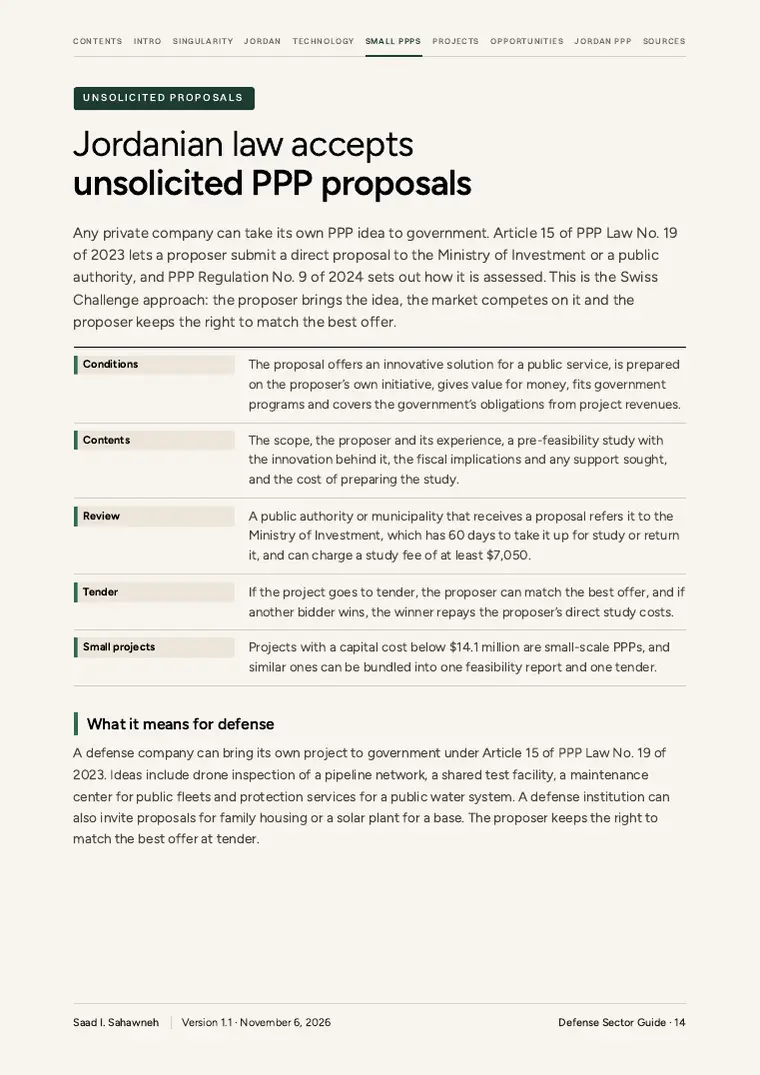
A defense company can bring its own project to government under Article 15 of PPP Law No. 19 of 2023. Ideas include drone inspection of a pipeline network, a shared test facility, a maintenance center for public fleets and protection services for a public water system. A defense institution can also invite proposals for family housing or a solar plant for a base. The proposer keeps the right to match the best offer at tender.

How it works

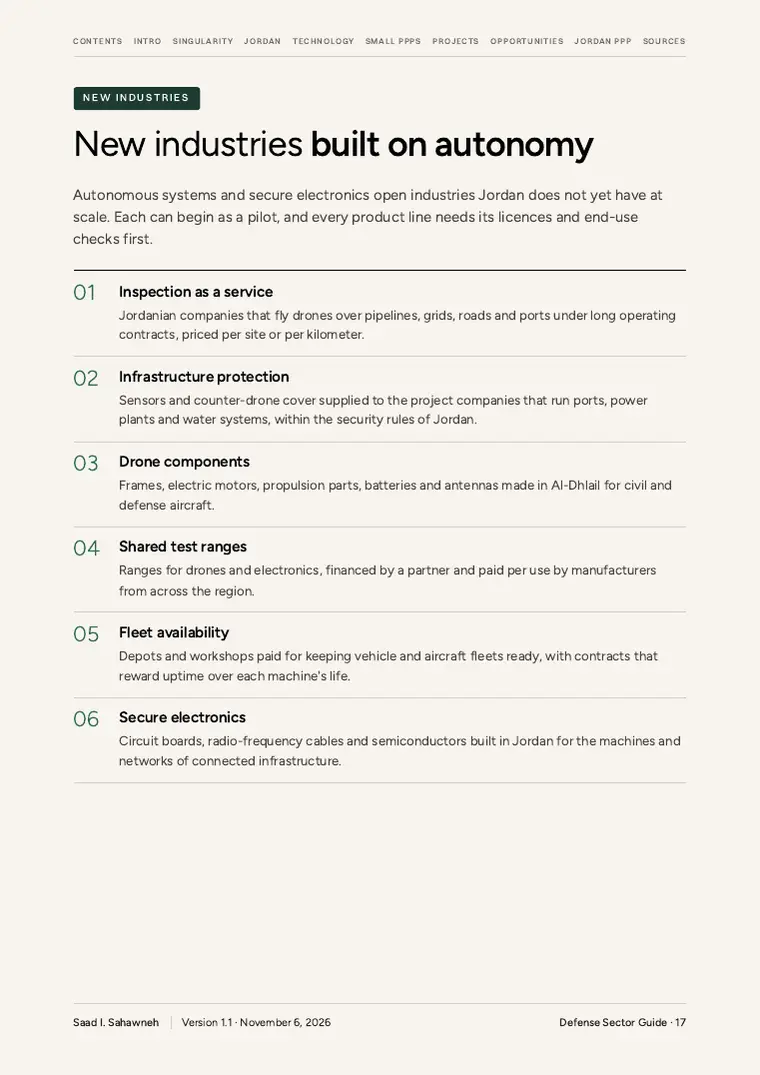
New industries

What the sector can create

  1. 01Inspection as a serviceJordanian companies that fly drones over pipelines, grids, roads and ports under long operating contracts, priced per site or per kilometer.
  2. 02Infrastructure protectionSensors and counter-drone cover supplied to the project companies that run ports, power plants and water systems, within the security rules of Jordan.
  3. 03Drone componentsFrames, electric motors, propulsion parts, batteries and antennas made in Al-Dhlail for civil and defense aircraft.
  4. 04Shared test rangesRanges for drones and electronics, financed by a partner and paid per use by manufacturers from across the region.
  5. 05Fleet availabilityDepots and workshops paid for keeping vehicle and aircraft fleets ready, with contracts that reward uptime over each machine’s life.
  6. 06Secure electronicsCircuit boards, radio-frequency cables and semiconductors built in Jordan for the machines and networks of connected infrastructure.

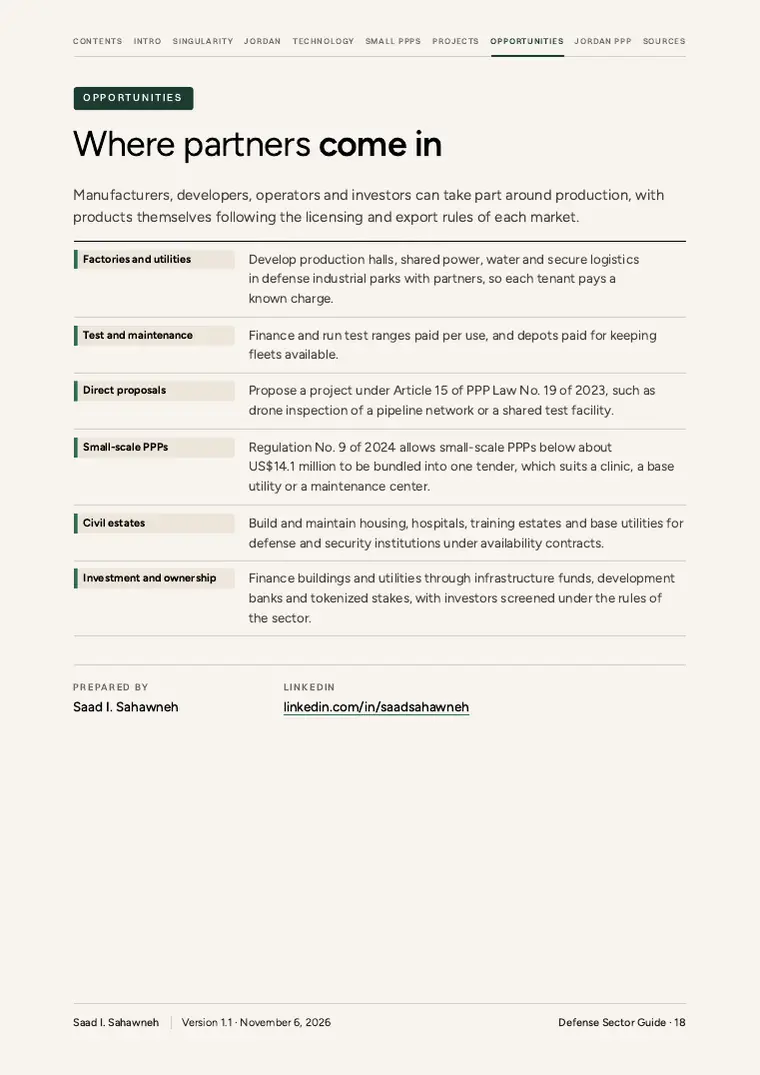
Opportunities

Where partners come in

Factories and utilities
Develop production halls, shared power, water and secure logistics in defense industrial parks with partners, so each tenant pays a known charge.
Test and maintenance
Finance and run test ranges paid per use, and depots paid for keeping fleets available.
Direct proposals
Propose a project under Article 15 of PPP Law No. 19 of 2023, such as drone inspection of a pipeline network or a shared test facility.
Small-scale PPPs
Regulation No. 9 of 2024 allows small-scale PPPs below about US$14.1 million to be bundled into one tender, which suits a clinic, a base utility or a maintenance center.
Civil estates
Build and maintain housing, hospitals, training estates and base utilities for defense and security institutions under availability contracts.
Investment and ownership
Finance buildings and utilities through infrastructure funds, development banks and tokenized stakes, with investors screened under the rules of the sector.

Inside the sector guide

23 pages on defense

14 chapters, from the sectors behind Jordan’s $86 billion to every project and the road ahead. Point at a chapter to see its page.

23
pages
14
chapters
9
projects
$10m
forward investment
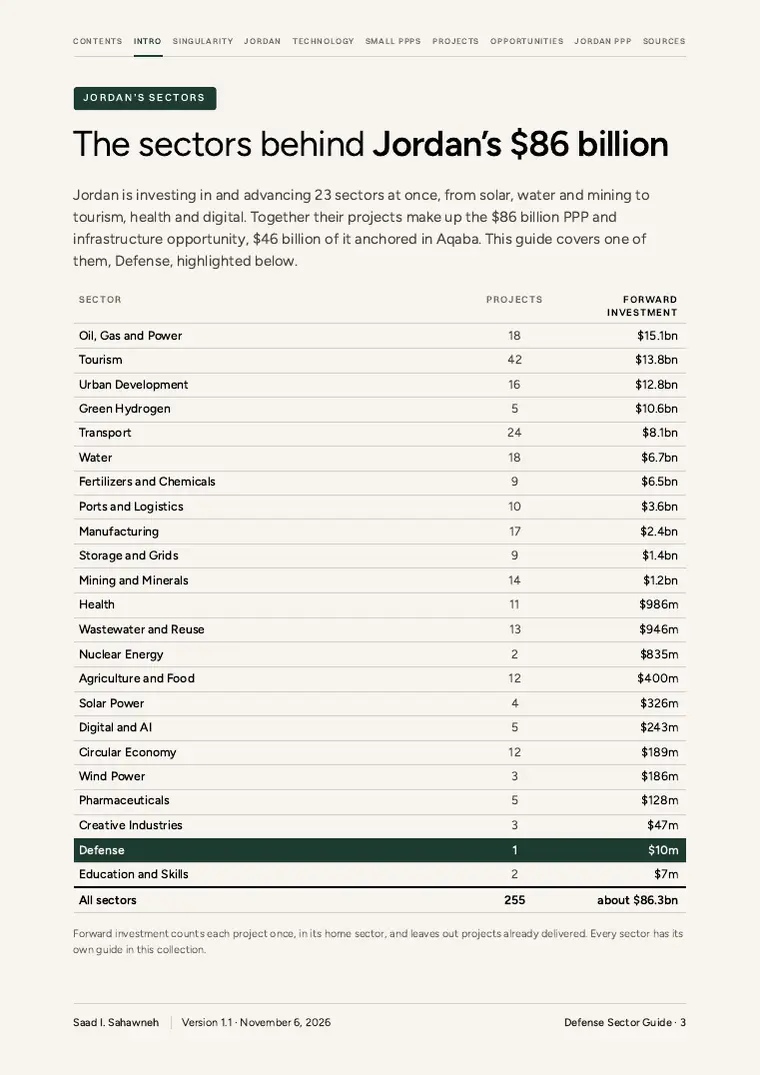
  1. Page 3 of the guide: Jordan’s sectors

    01Jordan’s sectors

    Where the $86 billion comes from, sector by sector

    Page 3 of 23

  2. Page 4 of the guide: The sector today

    02The sector today

    Defense in Jordan, in figures

    Page 4 of 23

  3. Page 6 of the guide: The singularity

    03The singularity

    Autonomy that protects the singularity

    Page 6 of 23

  4. Page 7 of the guide: Jordan and Aqaba

    04Jordan and Aqaba

    Its place in the $86 billion and Aqaba’s $46 billion

    Page 7 of 23

  5. Page 9 of the guide: Artificial intelligence

    05Artificial intelligence

    What AI changes, and what can be built

    Page 9 of 23

  6. Page 10 of the guide: Robotics

    06Robotics

    What robots build and keep running

    Page 10 of 23

  7. Page 11 of the guide: Tokenization

    07Tokenization

    How ownership opens up

    Page 11 of 23

  8. Page 12 of the guide: Small PPPs and labs

    08Small PPPs and labs

    Pilots at $100,000 and a research lab

    Page 12 of 23

  9. Page 14 of the guide: Unsolicited proposals

    09Unsolicited proposals

    Direct proposals under Article 15

    Page 14 of 23

  10. Page 15 of the guide: Flagship projects

    10Flagship projects

    The projects that lead the sector

    Page 15 of 23

  11. Page 16 of the guide: Every project

    11Every project

    Each project with its location, stage and value

    Page 16 of 23

  12. Page 17 of the guide: New industries

    12New industries

    New industries built on autonomy

    Page 17 of 23

  13. Page 18 of the guide: Where partners come in

    13Where partners come in

    Tenders, direct proposals, supply and finance

    Page 18 of 23

  14. Page 19 of the guide: The road ahead

    14The road ahead

    From factories to autonomous protection

    Page 19 of 23

Stained-glass illustration in blue glass of a city of towers under a rising arch

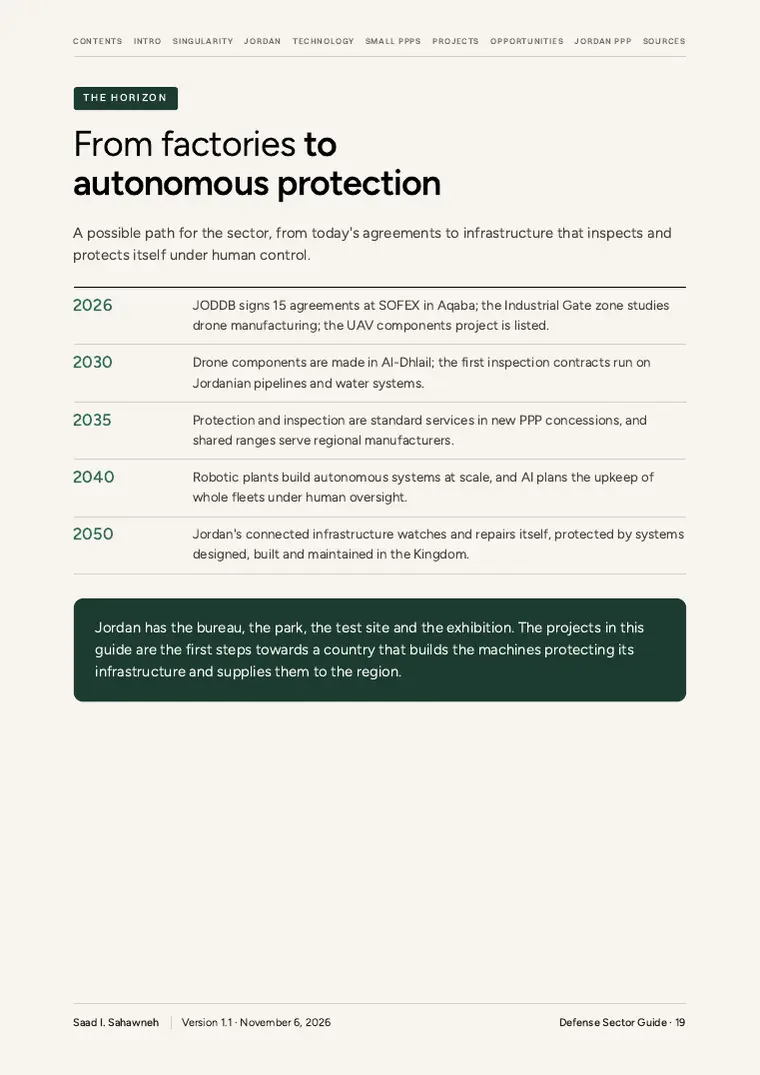
The road to the singularity

  1. 2026JODDB signs 15 agreements at SOFEX in Aqaba; the Industrial Gate zone studies drone manufacturing; the UAV components project is listed.
  2. 2030Drone components are made in Al-Dhlail; the first inspection contracts run on Jordanian pipelines and water systems.
  3. 2035Protection and inspection are standard services in new PPP concessions, and shared ranges serve regional manufacturers.
  4. 2040Robotic plants build autonomous systems at scale, and AI plans the upkeep of whole fleets under human oversight.
  5. 2050Jordan’s connected infrastructure watches and repairs itself, protected by systems designed, built and maintained in the Kingdom.

Jordan has the bureau, the park, the test site and the exhibition. The projects in this guide are the first steps towards a country that builds the machines protecting its infrastructure and supplies them to the region.

Organization guides

Launch a PPP program of your own

The organization guides closest to defense, each showing one kind of organization how to launch a PPP program, with six first steps.

  • Economic sectors

    Defense Manufacturers

    Your company launches a PPP program to develop defense factories and test ranges as public-private partnership (PPP) projects and to protect and inspect public infrastructure with autonomous systems.

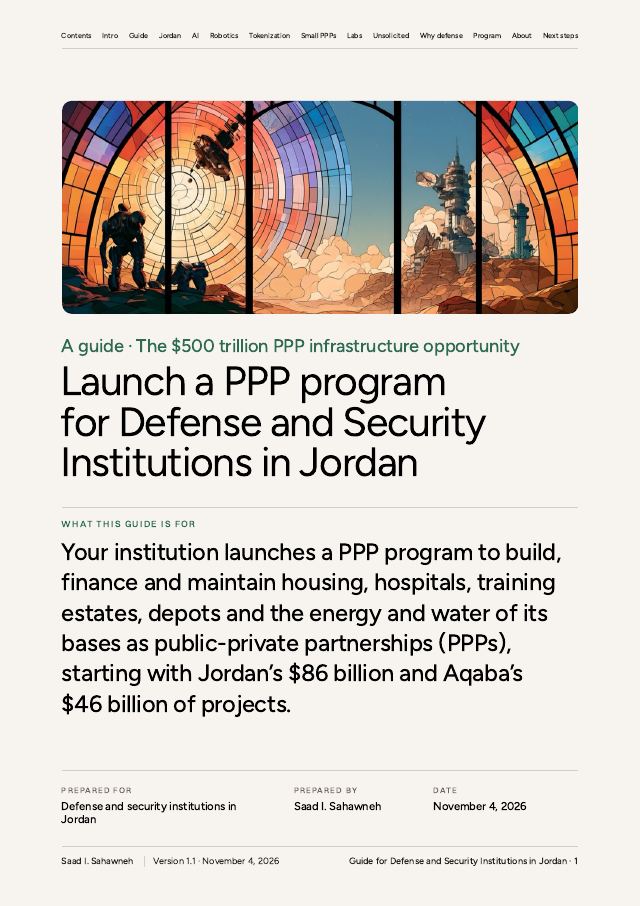
  • Your institution launches a PPP program to build, finance and maintain housing, hospitals, training estates, depots and the energy and water of its bases as public-private partnerships (PPPs).

  • Economic sectors

    Manufacturing Companies

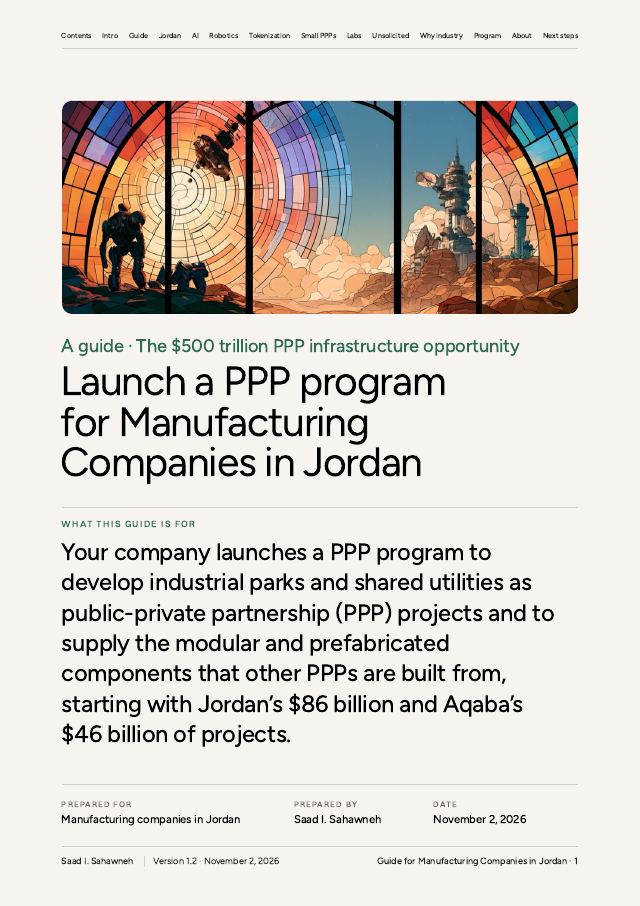
    Your company launches a PPP program to develop industrial parks and shared utilities as public-private partnership (PPP) projects and to supply the modular and prefabricated components that other PPPs are built from.

  • Technology and knowledge

    Robotics Companies

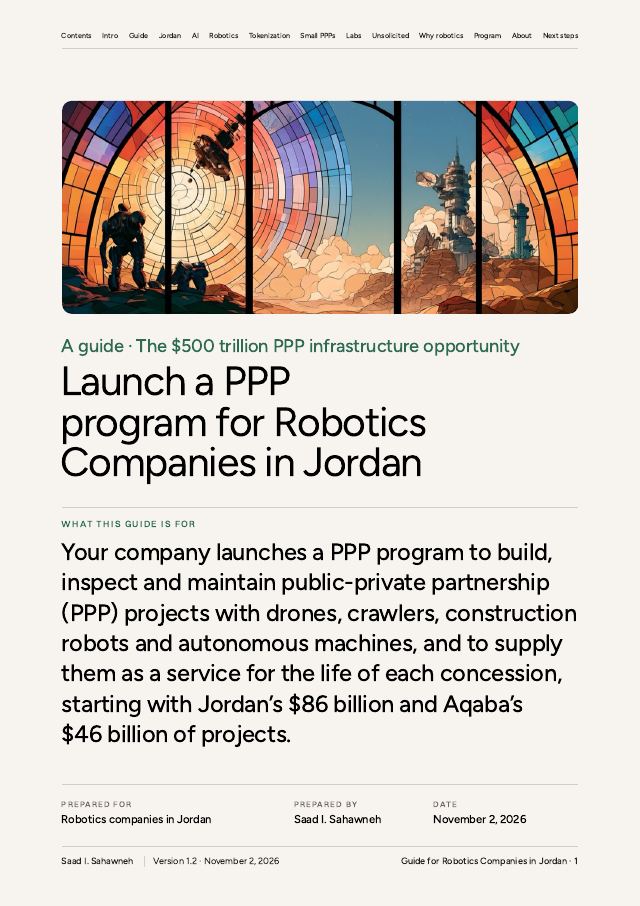
    Your company launches a PPP program to build, inspect and maintain public-private partnership (PPP) projects with drones, crawlers, construction robots and autonomous machines, and to supply them as a service for the life of each concession.

Who’s who in Jordan

12 kinds of organization take part in defense, each with the Jordanian body, project or program that ties it to the sector.

National leadership

Public sector

Where in Jordan

  • Mafraq

    Defense industrial park at Al Khalidiyah, 3,800 dunums, inaugurated September 2009

  • Zarqa

    Industrial Gate zone at Al-Dhlail: UAV and components manufacturing listed on Invest Jordan

  • Aqaba

    SOFEX defense exhibition every two years: 350 exhibiting companies in 2026

Developers and builders

Technology and knowledge

  • Robotics Companies

    Test site for drones and counter-drone systems, inaugurated October 2022

  • AI Companies

    JODDB investing in AI-driven threat detection and counter-swarm solutions

  • Universities

    JODDB collaborates with universities on counter-drone systems

Economic sectors

Questions

Questions and answers

What defense PPP projects are in Jordan?
The Defense Sector Guide covers 9 projects, with $10m of forward investment in the sector’s own projects. They include UAV & Components Manufacturing, Defense Industrial Park and Drone and Electronic Warfare Test Site.
What is the case for defense in Jordan?
Jordan’s defense industry grew around one institution. The Jordan Design and Development Bureau (JODDB), formerly the King Abdullah II Design and Development Bureau (KADDB), was set up by Royal Decree on August 24, 1999 to give the Jordan Armed Forces a technical capability at home. Ten years later it opened a defense industrial park in Mafraq.
How can a company take part in defense projects in Jordan?
Factories and utilities: Develop production halls, shared power, water and secure logistics in defense industrial parks with partners, so each tenant pays a known charge. Test and maintenance: Finance and run test ranges paid per use, and depots paid for keeping fleets available. Direct proposals: Propose a project under Article 15 of PPP Law No. 19 of 2023, such as drone inspection of a pipeline network or a shared test facility.
Can a company propose its own defense project in Jordan?
A defense company can bring its own project to government under Article 15 of PPP Law No. 19 of 2023. Ideas include drone inspection of a pipeline network, a shared test facility, a maintenance center for public fleets and protection services for a public water system. A defense institution can also invite proposals for family housing or a solar plant for a base. The proposer keeps the right to match the best offer at tender.
What comes next for defense in Jordan?
By 2030: Drone components are made in Al-Dhlail; the first inspection contracts run on Jordanian pipelines and water systems. By 2050: Jordan’s connected infrastructure watches and repairs itself, protected by systems designed, built and maintained in the Kingdom.
Is the Defense Sector Guide free?
Yes. The 23-page guide is free to read on this page and to download as a PDF.