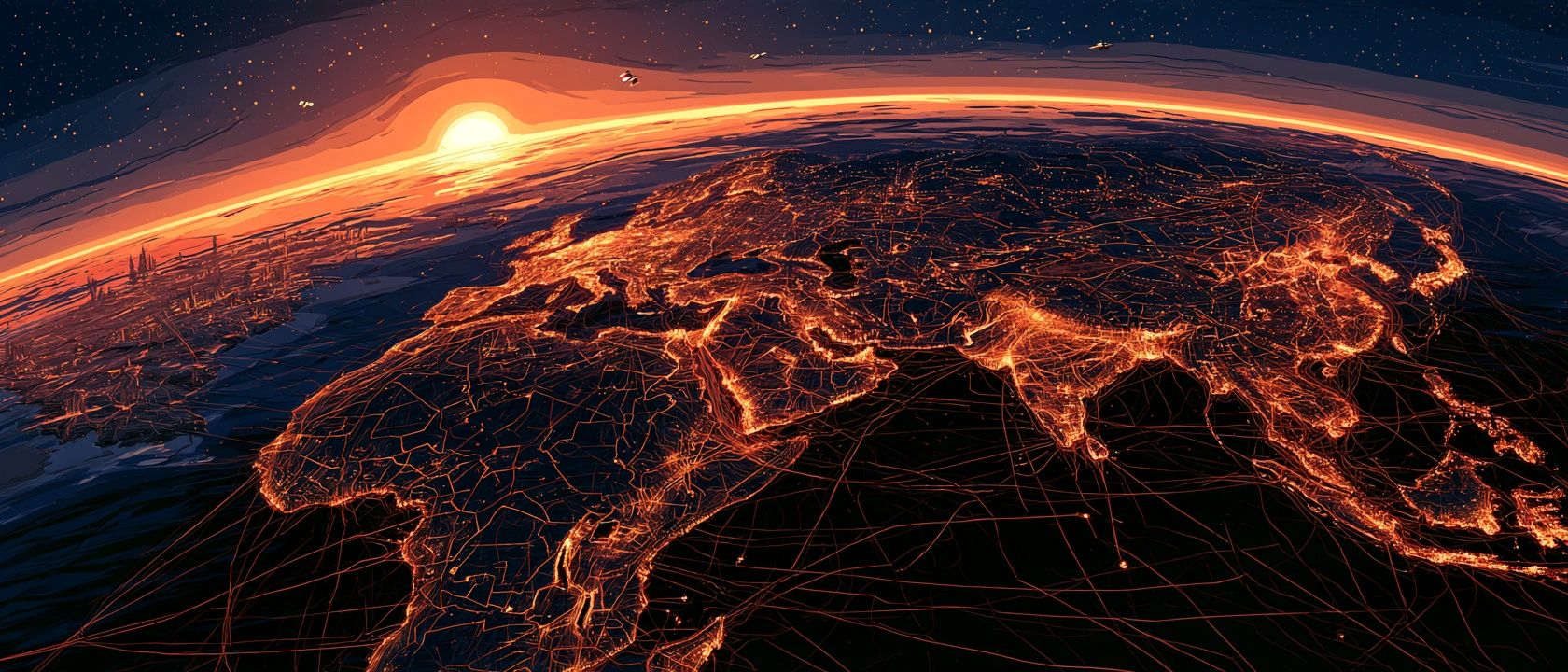
- What is the world’s biggest $500 trillion computer?
- It is the world’s physical infrastructure seen as one machine: roads, railways and pipes as its circuits, power plants and power lines as its power supply, cables and satellites as its network, data centers as its processors, batteries and dams as its memory, and sea ports as its ports. Sensors and AI are joining these parts into one connected, self-healing system.
- How big is it compared with today’s largest computers?
- The fastest supercomputer, LineShine, fills one building in Shenzhen and runs at 2.2 exaflops. The largest AI computer, xAI’s Colossus near Memphis, had about one gigawatt of computing capacity by mid-2026. The planet’s computer has more than 64 million kilometers of roads, about 80 million kilometers of power lines, more than 1.5 million kilometers of ocean cables and about 16,800 working satellites.
- How does infrastructure in one country become one computer?
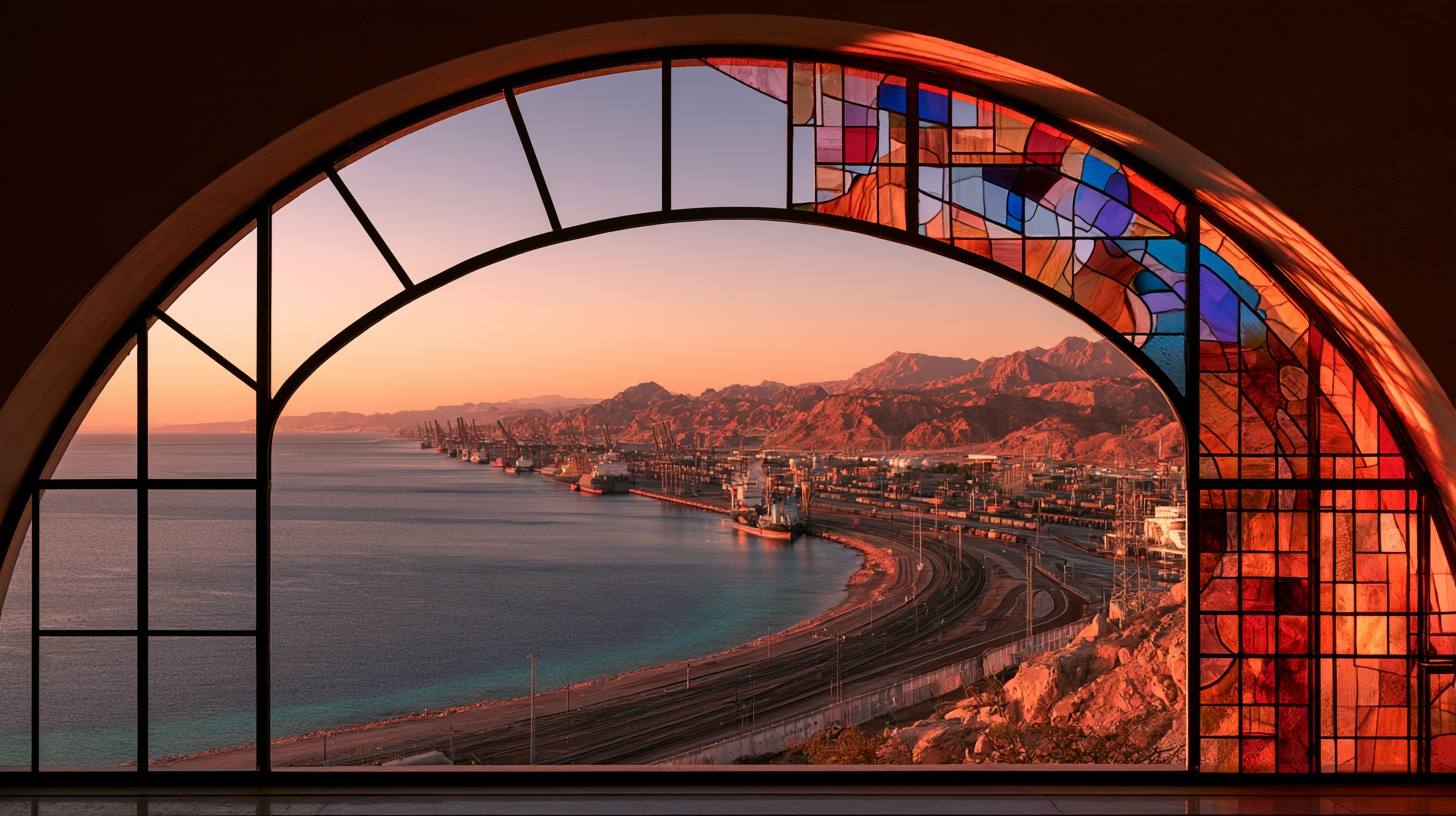
- Each project gets sensors and a shared way to talk. In Jordan, the port of Aqaba, the railways inland, the Aqaba-Amman water line, the grid, the Al-Mujib pumped-storage plant and new data centers can share what they sense, so the water line asks the grid for power, the grid tells data centers when solar power is cheap and pipes report their own leaks.
- How can the world’s biggest $500 trillion computer live in harmony with nature?
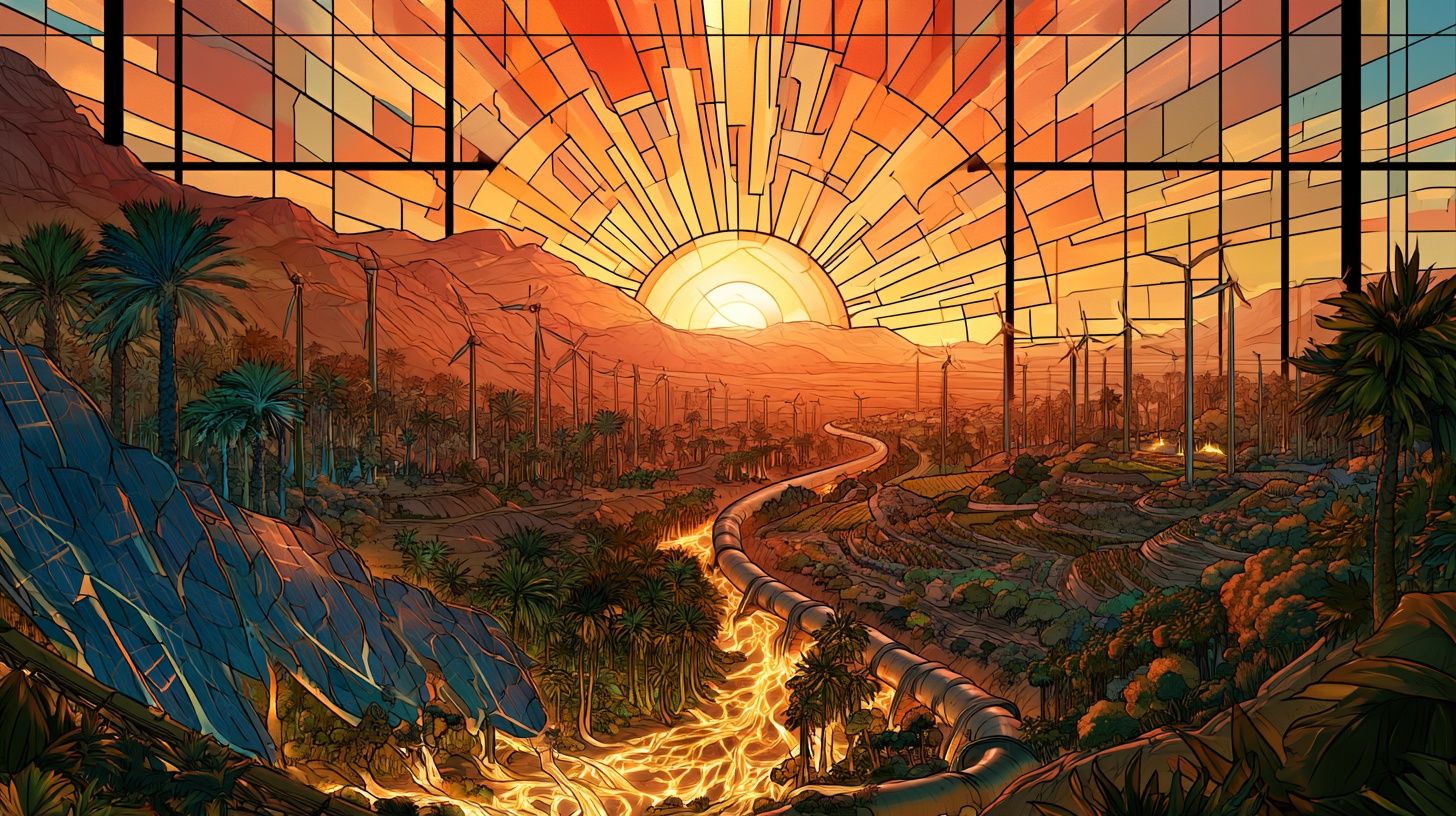
- By running on sun and wind, cleaning and reusing water, catching rain where it falls, recycling old parts and using its sensors to protect farms, valleys and towns. Jordan’s As-Samra plant already treats about 70% of the country’s wastewater, makes most of its own energy and sends clean water to farms in the Jordan Valley.
- Who builds the world’s biggest $500 trillion computer?
- Governments and private companies together, through public-private partnerships, with artificial intelligence to design and run it, robotics to build and repair it, and tokenization so the people who use it can own a share of it. Jordan has $86 billion of PPP and infrastructure projects in development, including $46 billion in Aqaba.