Skip to content
Jordan PPP
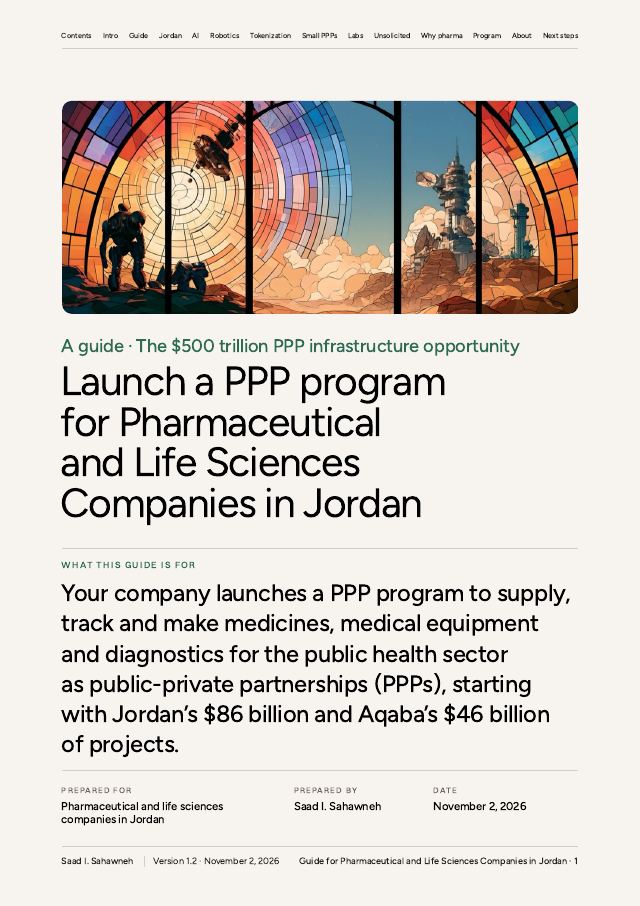
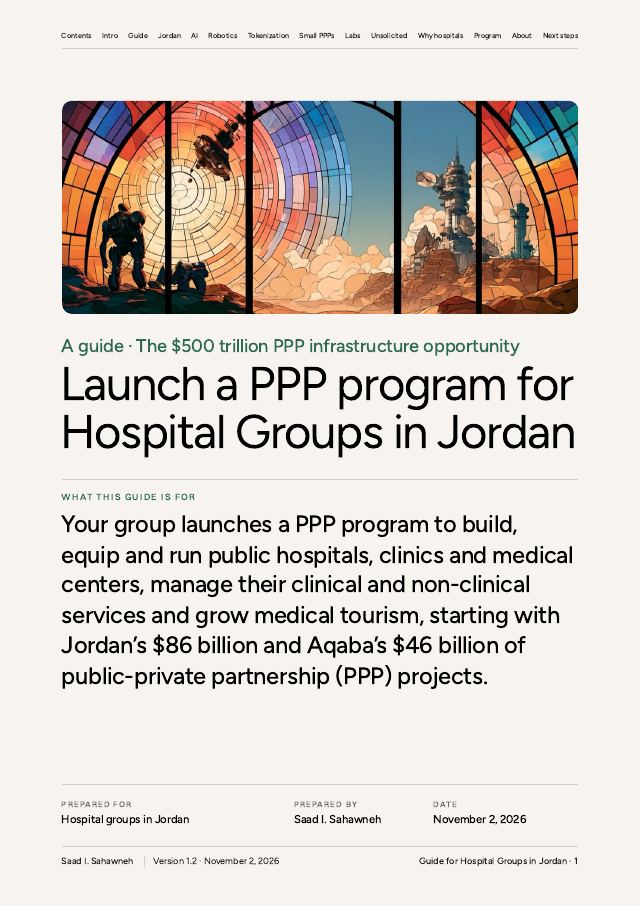
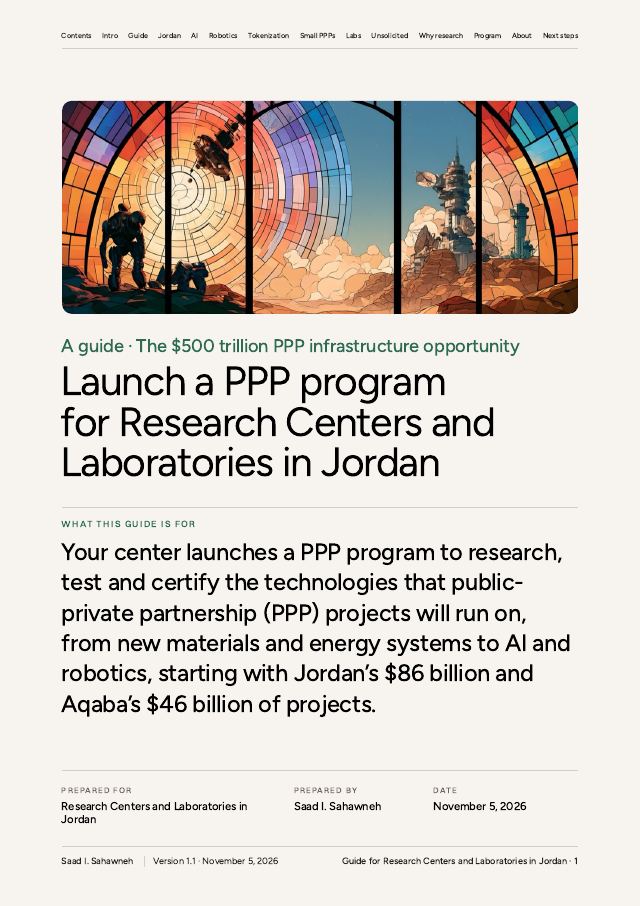
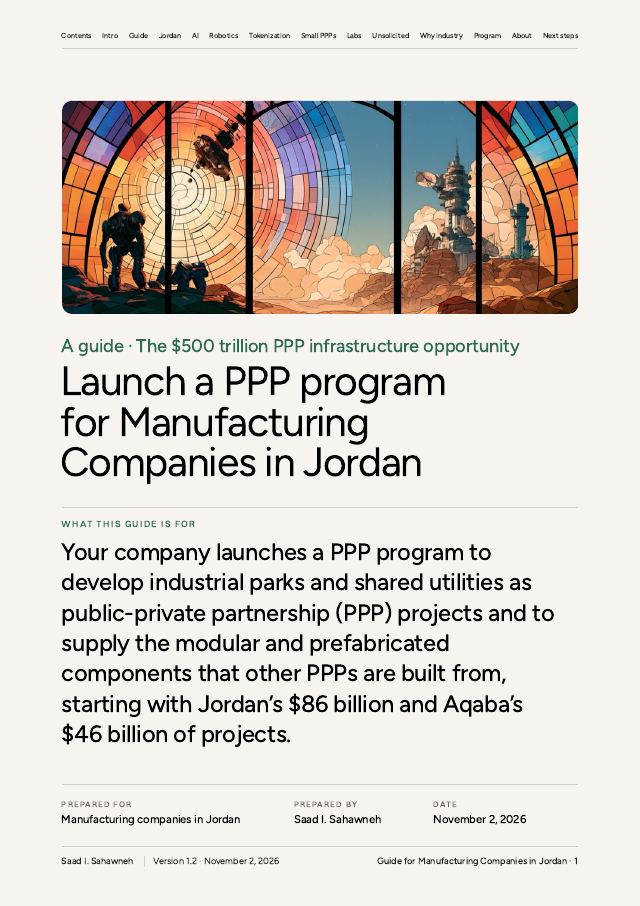
Stained-glass illustration in blue glass of a robot and towers at the dawn of the infrastructure singularity

Sector guide 20 of 22 · Version 1.1

Pharmaceuticals in Jordan

Medicines made in Jordan for the region, designed with intelligence.

Share
$128m
forward investment in its own projects
10
projects in this guide
1
in or linked to Aqaba

The sector today

Pharmaceuticals in Jordan

Jordan's pharmaceutical industry began with a small factory in Salt in 1962 and became one of the country's leading exporters. About 30 plants now make more than 5,000 products, employ about 10,000 people, 35% of them women, and sell to 85 countries.

Exports reached about US$1 billion in 2025, and the Economic Modernisation Vision targets about JD2.1 billion by 2033. Jordanian companies built a reputation for quality early: Hikma, founded in Jordan in 1978, set up the first FDA-inspected plant in the region. In November 2025 the Jordan Food and Drug Administration was admitted to PIC/S, the international scheme for good manufacturing inspection, with membership from January 2026.

The next phase moves up the value chain. In 2026 Invest Jordan prepared plants for biosimilars, cancer medicine ingredients and neonatal incubators, and a national system to trace every medicine. This guide sets out where the sector stands, the projects in the Jordan PPP project register, and the opportunities it opens as infrastructure moves towards the singularity.

$1bn
Jordan's pharmaceutical exports in 2025, about 7% of national exports, according to Invest Jordan.
85
Countries that buy medicines made in Jordan, with about 80% of production exported each year.
30
Pharmaceutical plants in Jordan, making more than 5,000 products with about 10,000 direct jobs.
JD2.1bn
Pharmaceutical exports targeted by 2033 under the Economic Modernisation Vision.

The singularity

Medicine becomes a product of intelligence

The infrastructure singularity is the point where roads, grids, ports and water networks become one connected, intelligent system, built by robotics, run by artificial intelligence and financed by tokenization. Health is part of that system, and medicine is becoming a product of data and automation as much as chemistry.

Artificial intelligence
Designs molecules, plans clinical trials, predicts demand and watches quality in real time, so a Jordanian plant can develop, release and ship new products faster and with fewer failed batches.
Robotics
Robots fill vials inside sealed barriers, handle potent ingredients and run laboratories through the night, raising quality and protecting workers.
Tokenization
Plants, product licences and royalties produce long-term income. Tokenized stakes let investors in Jordan and abroad share in the medicines a company sells.
Data and traceability
Serial codes on every pack follow each medicine from plant to patient, stopping counterfeits and feeding AI with real-world evidence.
Biology as code
Biosimilars, cell therapies and personalised medicines are built from biological designs that can be shared, tested and made close to patients.

Flagship projects

The projects that lead the sector

  • Open opportunity · Development zone

    Oncology API Manufacturing Plant

    A proposed plant making active ingredients for cancer medicines, with four multi-purpose reactor trains and a nameplate capacity of 40,000 kg a year. It targets international good manufacturing standards and buyers in the Middle East, Europe and the United States.

  • Open opportunity · JIEC zone, Amman

    Biosimilar Fill-Finish Manufacturing Plant

    A proposed sterile plant to fill 1 million vials a year of biosimilar medicines for cancer, diabetes, eye and autoimmune diseases, replacing imports and serving regional markets. It brings Jordan into biologics, the fastest-growing class of medicines.

  • Pipeline · Nationwide

    Pharmaceutical Track-and-Trace System

    A PPP concession for a national platform that follows every medicine from plant or port to pharmacy and patient using GS1 serial codes. The private partner would finance, build and run it, while the Jordan Food and Drug Administration keeps ownership of the data.

  • Open opportunity · Development zone

    Neonatal Incubator Manufacturing Plant

    A proposed medical device plant that moves in phases from distribution to assembly and full local manufacture of baby incubators, about 6,900 units a year, for Jordanian and regional hospitals.

  • Open opportunity · Jordan highlands

    Essential Oils Production Plant

    A proposed farm and distillery making 100,000 kg a year of thyme, lavender, peppermint, rosemary and sage oils from Jordanian herbs, with contracted growers in the highlands and a quality laboratory for cosmetic and pharmacopoeia grades.

Every project

10 projects in Jordan’s pipeline

Values in US dollars; * estimated where no figure has been published. Rows in grey sit in another sector and connect to this one.

ProjectLocationStageValue
Biosimilar Fill-Finish Manufacturing PlantJIEC industrial zoneOpen opportunity$29m*
Essential Oils Production PlantJordan highlands; farmland and growers iOpen opportunity$29m*
Neonatal Incubator Manufacturing PlantIndustrial development zone in JordanOpen opportunity$29m*
Oncology API Manufacturing PlantDevelopment zone in JordanOpen opportunity$29m*
Pharmaceutical Track-and-Trace SystemNationwidePipeline$10m*
Kingdom University Hospital (Kingdom Health Project)Airport Road, Ghamadan areaUnder way$400m
Aqaba Medical ComplexAqabaPipeline$106m
Medical Equipment (Leasing)12 Ministry of Health hospitals: Al-BashPipeline$40m*
Royal Medical Services (RMS) Digital TransformationNationwide RMS facilitiesUnder way$40m*
Zarqa Green Industrial Estate (Phase 1)Zarqa, about 30 km from AmmanDelivered$49m

AI, robotics and tokenization

What changes for Jordan's pharmaceutical sector

Artificial intelligence

For Jordan's drug makers AI shortens the path from molecule to market. Models screen formulations, predict stability and plan bioequivalence studies, and quality systems read batch records and sensor data in real time. For a sector that exports about 80% of what it makes, AI also prepares registration files for many regulators at once and forecasts demand in each market, so plants make what will sell.

What can be built

  • Formulation design. AI that proposes and tests generic and biosimilar formulations on screen before any batch is made.
  • Real-time release. Sensors and models that check quality during production, so batches are released faster and with fewer failures.
  • Regulatory files. Tools that draft and update registration dossiers for many export markets from one source.
  • Pharmacovigilance. Systems that read traceability and hospital data to detect side effects and shortages early.

More on artificial intelligence

Robotics

Robotics brings sterile and potent production within reach of more Jordanian plants. Robotic filling inside sealed barriers, automated laboratories and robots that handle potent ingredients raise quality and protect workers. In hospitals and warehouses, automated dispensing and picking cut errors and waste, and the serial codes on every pack let machines track each unit from the plant to the patient.

What can be built

  • Aseptic filling. Robotic vial and syringe filling for biosimilars and injectables inside sealed isolators.
  • Automated laboratories. Robotic sample handling and testing for quality control and bioequivalence studies.
  • Pharmacy automation. Dispensing robots in public hospitals and central pharmacies, run as long-term service contracts.
  • Smart warehouses. Cold-chain storage with robotic picking that reads every serial code in and out.
More on robotics

Tokenization

Pharmaceutical plants, product licences and royalty streams earn steady income over many years, which tokenization suits. A Jordanian company could finance a new production line or a biosimilar portfolio by selling tokenized stakes paid from sales, and a traceability concession or a cold-chain warehouse paid by fees could be owned in part by small investors in Jordan and abroad.

What can be built

  • Production lines. Tokenized stakes in a new filling or ingredient line, paid from the products it makes.
  • Royalty tokens. Shares in the royalties from licensed or newly registered medicines.
  • Concession revenue. Tokens backed by the fees of the national traceability platform or cold-chain services.
  • Device leasing. Medical equipment owned through tokens and leased to hospitals, paid from monthly fees.
More on tokenization

Start small, or bring your own idea

Small PPPs and unsolicited proposals

Small PPPs and research labs

A pharmaceutical research lab, hosted by the Jordan Food and Drug Administration, would test new methods with drug makers and hospitals. Pilots of about $100,000 each could trace every medicine pack in one public hospital from delivery to patient, run an AI model that predicts shortages of essential medicines, and test a small continuous production line for one generic product, with the results published for the whole sector.

How it works

Unsolicited proposals under Article 15

A pharmaceutical or health technology company can bring its own project under Article 15. Examples include a central cold-chain warehouse for public hospitals, automated pharmacies in public hospitals paid per prescription, a medical device maintenance and leasing service, and a plant making essential medicines or vaccines under a long-term supply agreement with the government.

How it works

New industries

What the sector can create

  1. 01Biologics and biosimilarsSterile fill-finish first, then cell culture production of antibodies and other biological medicines for the region.
  2. 02High-potency ingredientsActive ingredients for cancer and other specialty medicines, made in contained plants to the strictest standards.
  3. 03Medical devicesIncubators, monitors, diagnostics and surgical tools made in Jordan and serviced across the region's hospitals.
  4. 04AI drug developmentCompanies that use AI and Jordan's clinical data to design, test and register new medicines and formulations.
  5. 05Botanical activesEssential oils, extracts and natural ingredients from Jordanian herbs for medicines, cosmetics and food.
  6. 06Continuous manufacturingSmall, automated production lines that make medicines on demand, close to patients and with less waste.

Opportunities

Where partners come in

Listed opportunities
Take up the plants offered by Invest Jordan and at the Jordan-EU Investment Conference on November 19, 2026, from biosimilars to cancer ingredients.
Track-and-trace concession
Bid for the national traceability platform, a PPP in which the private partner finances, builds and operates the system for the Jordan Food and Drug Administration.
Direct proposals
Propose a project under Article 15 of PPP Law No. 19 of 2023, such as cold-chain warehouses or automated hospital pharmacies.
Small-scale PPPs
Regulation No. 9 of 2024 allows small-scale PPPs below about US$14.1 million, which suits laboratories, dispensing systems and device services.
Partnerships and licensing
License products to Jordanian manufacturers or form joint ventures that use their plants and market access.
Investment and ownership
Finance plants through development banks, healthcare funds and tokenized stakes that open ownership to more investors.
Stained-glass illustration in blue glass of a city of towers under a rising arch

The road to the singularity

  1. 2026JFDA joins PIC/S; biosimilar, cancer ingredient and device plants offered to investors; national traceability prepared as a PPP.
  2. 2030Every medicine pack in Jordan is traced; the first biosimilars are filled in Jordan for regional markets.
  3. 2035Exports pass the JD2.1 billion target set for 2033; AI runs development, quality control and supply planning.
  4. 2040Continuous, automated plants make medicines on demand, and Jordanian firms register products designed with AI.
  5. 2050Jordan is a regional hub for intelligent medicine, from biologics to personalised treatments made close to patients.

Jordan has made medicines for the region for more than sixty years. The projects in this guide are the first steps towards an industry that designs, makes and traces medicines with intelligence.

Guides for organizations

Launch a PPP program of your own

The guides closest to Jordan's pharmaceutical sector, each showing one kind of organization how to launch a PPP program, with six first steps.

  • Operators and services

    Hospital Groups

    Your group launches a PPP program to build, equip and run public hospitals, clinics and medical centers, manage their clinical and non-clinical services and grow medical tourism.

  • Technology and knowledge

    Research Centers and Laboratories

    Your center launches a PPP program to research, test and certify the technologies that public-private partnership (PPP) projects will run on, from new materials and energy systems to AI and robotics.

  • Economic sectors

    Manufacturing Companies

    Your company launches a PPP program to develop industrial parks and shared utilities as public-private partnership (PPP) projects and to supply the modular and prefabricated components that other PPPs are built from.

Also part of Jordan's pharmaceutical sector

See every guide and sector on one map