Skip to content
Jordan PPP
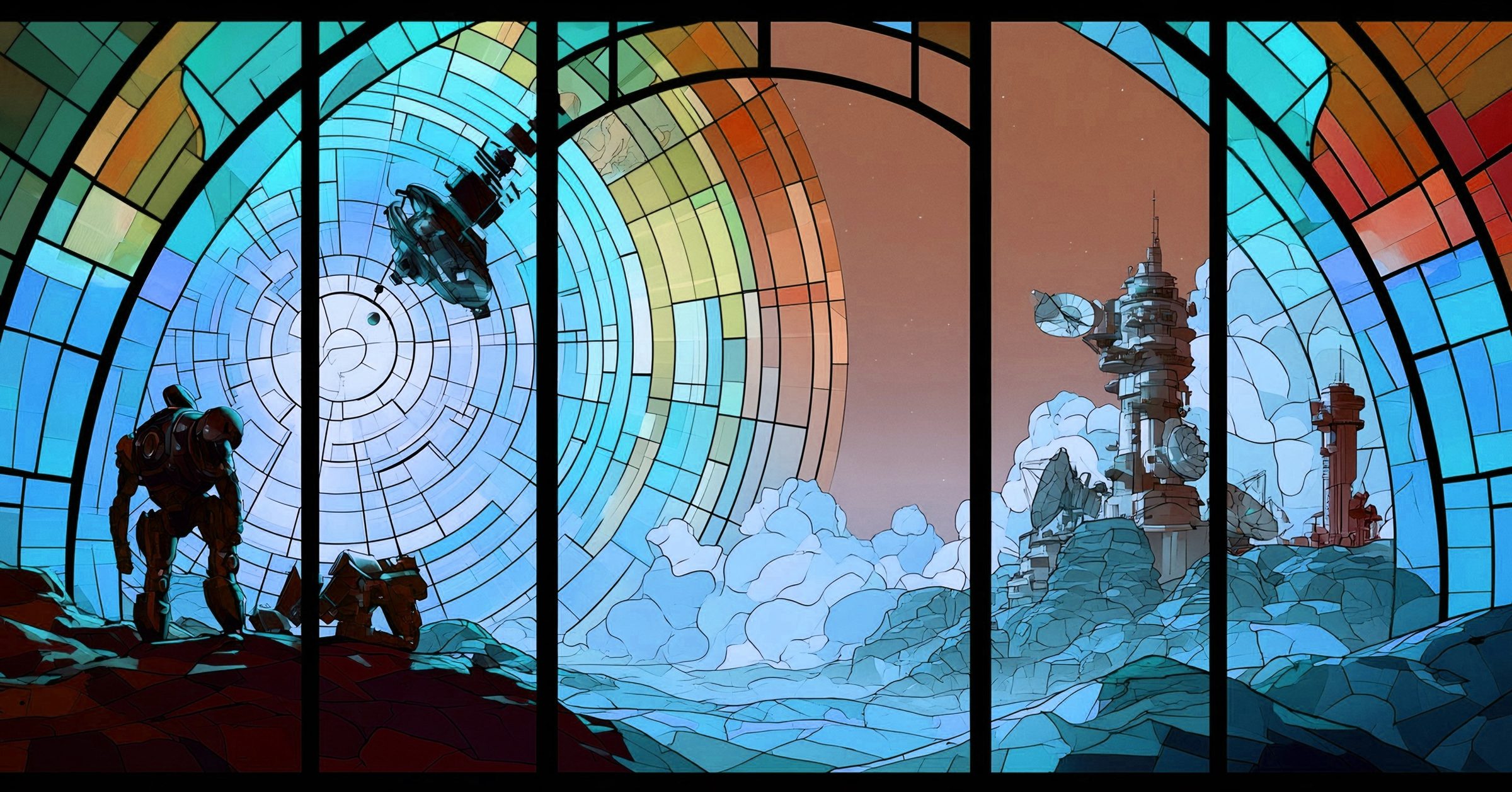
Stained-glass illustration in blue glass of a robot and towers at the dawn of the infrastructure singularity

Sector guide 14 of 22 · Version 1.1

Nuclear Energy in Jordan

Small reactors, central Jordan uranium and the science to use them.

Share
$835m
forward investment in its own projects
6
projects in this guide
3
in or linked to Aqaba

The sector today

Nuclear Energy in Jordan

Jordan holds uranium in its own ground, a working research reactor and a commission that has studied nuclear power for almost two decades. The 2024 Red Book lists 63,019 tonnes of identified conventional uranium resources, with about 98,000 tonnes more in phosphate deposits.

The programme has changed shape. Plans for two large reactors were dropped in 2018 over financing costs, and the Jordan Atomic Energy Commission (JAEC) turned to small modular reactors, signing agreements with several vendors and studying nuclear-powered desalination and water pumping for a country short of water.

Fuel is moving first. The Jordan Uranium Mining Company and Kazakhstan's Kazatomprom signed a Heads of Agreement in August 2025 on the Central Jordan Uranium Project. This guide sets out where the sector stands, the projects in the Jordan PPP project register, and how firm, compact power links Jordan to the singularity.

63,019 tU
Identified conventional uranium resources in Jordan, mainly in central Jordan, per the 2024 Red Book.
98,000 tU
Further unconventional uranium resources in phosphate deposits in the Al Risha and Eshidiyya areas.
400 tU
Upper end of the 300 to 400 tonnes a year uranium mill planned about 80 km south of Amman.
5 MW
Thermal power of the Jordan Research and Training Reactor, commissioned in December 2016.

The singularity

Firm power for the singularity

The infrastructure singularity is the point where roads, grids, ports and water networks become one connected, intelligent system, built by robotics, run by artificial intelligence and financed by tokenization. Such a system needs clean power that runs every hour of every day, whatever the weather.

Artificial intelligence
Simulates reactor cores, monitors thousands of sensors and supports operators, and speeds up the design and licensing reviews that set the pace of new nuclear.
Robotics
Robots handle inspection, maintenance and fuel in areas people cannot easily reach, and modular factories build reactor parts like aircraft.
Tokenization
A reactor earns power and water revenue for sixty years. Tokenized stakes could spread that long-term ownership across many investors.
Compute
AI data centers need constant clean power. A small reactor beside a data campus gives Jordan firm power for regional compute.
Water
Reactor heat and power can run desalination and pump water uphill to Amman, turning energy into the country's scarcest resource.

Flagship projects

The projects that lead the sector

  • Pipeline · Site to be decided

    Small Modular Reactor (SMR) Nuclear Programme

    JAEC's plan for small modular reactors to produce power and desalinated water, replacing the large-reactor plan. Vendor feasibility studies are under way, and an IAEA expert review found Jordan's reports a good basis for a feasibility study. Candidate sites include the Aqaba and Amra corridor.

  • Pipeline · Central Jordan

    Central Jordan Uranium Project (CJUP)

    JUMCO's pilot plant has operated since 2021, and a mill of 300 to 400 tonnes of uranium a year is planned. JUMCO and Kazatomprom signed a Heads of Agreement in August 2025, with a joint venture planned if the pilot results are positive.

  • Studies · Aqaba to Amman

    Nuclear Desalination and Water Pumping Studies

    JAEC is studying how small reactors could power seawater desalination and pump water inland, including their fit with the national water conveyance from Aqaba to Amman.

  • Delivered · Ramtha

    Jordan Research and Training Reactor

    A 5 MW research reactor at the Jordan University of Science and Technology, built by a KAERI-led consortium and commissioned in December 2016. It trains nuclear specialists and supplies iodine-131 to hospitals across Jordan.

  • Delivered · Allan

    SESAME Synchrotron

    The region's synchrotron light source, an international research center hosted by Jordan. In 2019 it became the first large accelerator complex fully powered by renewable energy, from a 6.48 MW solar plant.

Every project

6 projects in Jordan’s pipeline

Values in US dollars; * estimated where no figure has been published. Rows in grey sit in another sector and connect to this one.

ProjectLocationStageValue
Small Modular Reactor (SMR) Nuclear ProgrammeTo be decidedPipeline$800m*
Central Jordan Uranium Project (CJUP)Central JordanPipeline$35m*
Aqaba-Amman Water Desalination & Conveyance Project (AAWDCP)Aqaba to AmmanAwarded$5.8bn
JIFCO Fertilizer ExpansionJIFCO fertilizer complex at Eshidiya, MaTendering$1bn
Arab Potash × JPMC Integrated Fertilizer ComplexEshidiyaPipeline$1bn
Phosphate Exploration (Block A3)MafraqOpen opportunity$40m*

AI, robotics and tokenization

What changes for nuclear energy

Artificial intelligence

For nuclear energy in Jordan, AI shortens the path from study to licence. Models can compare reactor designs and sites, simulate cores and safety cases, and help JAEC and the regulator review thousands of pages of documents. In operation, AI watches every sensor of a reactor or a uranium mill, flags drift early and supports operators, while the same tools help JUMCO model ore bodies and plan processing.

What can be built

  • Site screening. Models that rank candidate sites by seismic data, water, grid access and population for a first small reactor.
  • Licensing assistant. AI that drafts and checks safety documents against regulations, shortening reviews while keeping every standard.
  • Ore modeling. Machine learning on drill and assay data that maps central Jordan uranium and plans its mining.
  • Plant monitoring. Systems that track reactor and mill sensors and warn operators of faults early.

More on artificial intelligence

Robotics

Nuclear work takes place where people should spend as little time as possible, which makes robotics essential. Remote handling systems move fuel and isotopes, robots inspect pipes and vessels inside a plant, and drones survey mines and tailings. Small modular reactors are themselves built in factories on automated lines, so the robots that build them also decide how fast and how cheaply they can reach Jordan.

What can be built

  • Hot cells. Remote manipulators that handle isotopes safely at the research reactor and at future production lines.
  • Mine automation. Autonomous drills, loaders and drones for uranium mining and heap leaching in central Jordan.
  • Plant inspection. Robots that inspect welds, pipes and vessels during outages and shorten maintenance.
  • Module fabrication. Robotic welding and assembly of reactor modules and steel structures, a supply role Jordanian firms could grow into.
More on robotics

Tokenization

A small reactor would earn power and water revenue for decades, the kind of long, steady income tokenization handles well. Tokenized stakes could let Jordanian and regional investors share in a future plant alongside export credit and development finance. Tokens can also trace uranium and isotopes from mine or reactor to user, giving buyers and regulators a verified record of every shipment.

What can be built

  • Reactor stakes. Tokenized minority stakes in a future small reactor, paid from its power and water sales.
  • Uranium traceability. A ledger that tracks yellowcake from the central Jordan mill to its buyers and supports safeguards reporting.
  • Isotope supply. Tokenized records that trace medical isotopes from production to hospital and settle orders automatically.
  • Offtake notes. Tokenized notes backed by uranium offtake contracts that fund the mill before production starts.
More on tokenization

Start small, or bring your own idea

Small PPPs and unsolicited proposals

Small PPPs and research labs

Nuclear projects are large, but the research around them can start small. A nuclear research lab could run three pilots of about $100,000 each: AI tools that screen sites and draft licensing documents for a small reactor, a robotic and drone survey of a central Jordan uranium area, and a test rig for recovering uranium from phosphoric acid at Eshidiya. Small PPPs below about US$14.1 million can then carry proven ideas forward.

How it works

Unsolicited proposals under Article 15

A company can bring a nuclear-related project to government under Article 15 of PPP Law No. 19 of 2023. Ideas include recovering uranium as a by-product of phosphoric acid production, an isotope distribution network for hospitals, site and grid studies for a small reactor beside a desalination plant, and training and research services built around the research reactor. The proposer keeps the right to match the best offer if the project goes to tender.

How it works

New industries

What the sector can create

  1. 01Uranium yellowcakeMining and milling central Jordan uranium into yellowcake for export and, in time, for the country's own reactors.
  2. 02Uranium from phosphateRecovering uranium as a by-product of phosphoric acid and fertilizer production, adding value to Jordan's phosphate industry.
  3. 03Medical isotopesProducing isotopes for diagnosis and cancer treatment for hospitals in Jordan and across the region.
  4. 04Nuclear desalinationWater from the sea made with reactor power and heat, supplying cities and industry far inland.
  5. 05Reactor supply chainJordanian firms making modules, steel structures and components for small reactors built in factories.
  6. 06Nuclear and accelerator scienceMaterials testing, imaging and analysis services for industry, building on the research reactor and SESAME.

Opportunities

Where partners come in

Feasibility and design
Support JAEC's vendor feasibility studies, site studies and grid integration work as Jordan moves towards choosing a small reactor design.
Uranium development
Join the Central Jordan Uranium Project as a contractor, equipment supplier or offtaker as the joint venture moves towards a bankable feasibility study.
Direct proposals
Propose energy and water projects under Article 15 of PPP Law No. 19 of 2023, such as nuclear-ready desalination studies.
Isotopes and science
Partner on isotope production, research services and training with the research reactor and Jordanian universities.
Industrial supply
Build fabrication and services capacity in development zones and the Aqaba Special Economic Zone, with Investment Environment Law incentives.
Investment and ownership
Finance future reactors through export credit agencies, development banks, sovereign funds and tokenized stakes.
Stained-glass illustration in blue glass of a city of towers under a rising arch

The road to the singularity

  1. 2026JUMCO prepares the technical studies for a bankable uranium feasibility study; JAEC continues small reactor studies with vendors.
  2. 2030A small reactor design and site are chosen; the uranium joint venture builds towards commercial production.
  3. 2035Central Jordan produces yellowcake; licensing and early works start on the first small reactor.
  4. 2040The first small reactors supply firm power and desalinated water, balancing a grid run mostly on sun and wind.
  5. 2050Factory-built reactors, robots and AI run a fleet that powers Jordan's water, compute and industry around the clock.

Jordan has the uranium, the institutions and the need. The projects in this guide are the first steps towards firm, clean power that can run the country's water and intelligence through every hour of the day.

Guides for organizations

Launch a PPP program of your own

The guides closest to nuclear energy, each showing one kind of organization how to launch a PPP program, with six first steps.

  • Your organization launches a PPP program to prepare, finance and deliver small modular reactors, nuclear-powered desalination and isotope production as public-private partnerships (PPPs).

  • Economic sectors

    Energy Developers

    Your company launches a PPP program to develop solar, wind, storage, green hydrogen and grid projects as public-private partnerships (PPPs) and to power the water, transport and industrial projects around them.

  • Technology and knowledge

    Research Centers and Laboratories

    Your center launches a PPP program to research, test and certify the technologies that public-private partnership (PPP) projects will run on, from new materials and energy systems to AI and robotics.

  • Technology and knowledge

    Universities

    Your university launches a PPP program to teach public-private partnerships (PPPs), research the AI, robotics and tokenization that will run infrastructure, and test them on real projects.

Also part of nuclear energy

See every guide and sector on one map