Stairway to PPP heaven
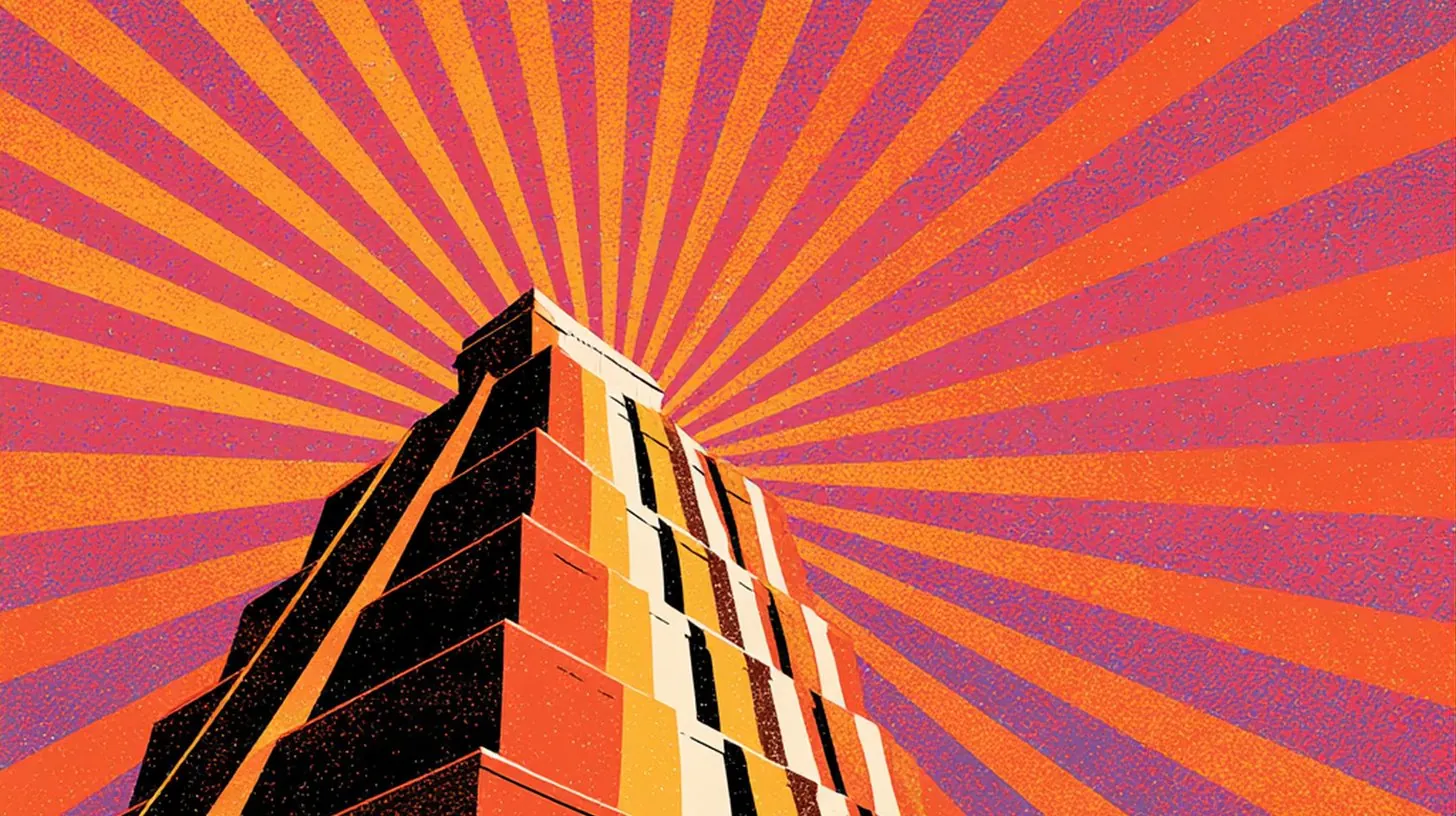
The PPP pyramid is a stairway of nine steps, each ten times higher than the last, and the teams that reach the top climb it one proven step at a time.
A small PPP in Jordan scales up by climbing the PPP pyramid one step at a time, copying a proven project ten times before it moves to the next size. The PPP pyramid has nine steps, from a $10,000 Nano PPP to a $1 trillion Cosmic PPP, and a team that climbs them in order carries tested contracts, real data and a working team into the large projects anchored in Aqaba and across Jordan.
Picture the pyramid as a staircase. At the bottom sits a project one person can understand in an afternoon, such as sensors on a school’s water tank, and at the top sits the infrastructure of a whole continent. From the bottom of the stairway to the top, a project grows 100 million times, and every step is ten times higher than the one before it.
9
steps on the PPP pyramid, from a $10,000 Nano PPP to a $1 trillion Cosmic PPP
What are the steps of the stairway?
The stairway has nine steps in three flights. The base holds the Nano, Micro and Mini PPPs, from $10,000 to $1 million. The middle holds the Urban, Metro and Mega PPPs, up to $1 billion. The top holds the Giga, Terra and Cosmic PPPs, up to $1 trillion. Jordan has projects waiting on every flight, and $46 billion of them are anchored in Aqaba.
What does a team have to prove before each step up?
Before each step up, a team in Jordan has to show that the step below it works on its own. A Nano PPP proves the idea, a Micro PPP proves the contract and who pays for it, and a Mini PPP produces the numbers a bank needs before it lends more. Each higher step proves the same things again for a larger team and a longer contract.
- 01Nano PPP, $10,000. The idea has to work. Sensors on a school’s water tank or a pilot app either work or fail within weeks, and the team knows exactly why.
- 02Micro PPP, $100,000. The contract has to work. A small company, a municipality and a local bank write their first real contracts and learn who pays, who repairs and who answers the phone when something breaks.
- 03Mini PPP, $1 million. The numbers have to hold. A solar-powered pumping station or a cold store for farmers runs long enough to show what it saves and how often it breaks, and banks want exactly those numbers before they lend more.
- 04Urban PPP, $10 million. The team has to hold together. Several contractors work side by side on street lighting for a district or a small water plant, and the way they organize themselves matters as much as the technology.
- 05Metro PPP, $100 million. The partnership has to last. Banks, engineers and the government work together for years under one long contract on a bus line, a large solar farm or a modern hospital.
- 06Mega PPP, $1 billion. The consortium has to form. A port terminal or a big water plant needs a group of companies that join forces, because no single company holds all the skills and all the money.
Above the Mega step, the proof changes shape. A Giga PPP works like a program of dozens of contracts across many sites, a Terra PPP crosses governments and generations, and a Cosmic PPP links the infrastructure of a continent into one program run by an operating system such as EarthOS. The PPP pyramid blog describes each of the nine sizes in turn.
Why does every step go up ten times?
Each step is ten times bigger than something already proven, so the risk of any single leap stays small. When a nano project works in Jordan, the team copies it ten times and runs a micro PPP, then copies that ten times and runs a mini PPP.
The arithmetic favors the bottom of the stairway. One million dollars buys a single mini PPP or 100 nano PPPs, and the price of one giga PPP would pay for a million nano projects. Every one of those small projects is a chance to learn which contract works, which sensor survives the desert heat and which village group keeps a system running.
Large projects climb slowly because each of their lessons takes years to arrive. Design takes about 12 months, construction about 36 months and operation 20 years. A nano PPP can be built in weeks, so a team working at the base can go around the build, measure and fix loop dozens of times while a single mega project is still being designed and built.
Run the loop again until it works. Then copy the project ten times and step up to the next size.
How do AI, robotics and tokenization speed up the climb?
AI, robotics and tokenization shorten the time a team in Jordan spends on each step. AI shortens the measuring, robotics shortens the building and tokenization shortens the funding, so the loop of build, measure, fix and repeat runs faster at every size of the pyramid.
AI reads sensor data the moment it arrives and prepares the studies, contracts and tenders, so a team sees on Tuesday what used to show up in a report next year. Robots that lay, weld and print standard parts in place lower the cost of the next copy, which is exactly what each step up the stairway asks for.
Funding is the hardest part of the first steps. A $10,000 project is too small for most banks and just the right size for many small investors, and ownership split into tiny shares lets a neighborhood own a piece of its own solar roof. Once the base has a record, a bank can lend against small PPPs as a standard product many times over, as the banks guideDownload the guide describes.
What waits at the top of the stairway?
At the top of the stairway waits the infrastructure singularity, the point at which it becomes cheaper to build the pilot than to conduct the study. Jordan climbs toward it with small PPPs run in parallel, a research lab in each sector and every result published, so the lessons climb the pyramid faster than the projects do.
In PPP heaven, a team with a new idea builds it, measures it and fixes it within weeks, and the study of a large project becomes the record of hundreds of small ones that already worked. Every nano PPP adds one more sensor and one more lesson to the world’s biggest computer, and a fix found on a village water tank in Jordan can protect every tank like it on Earth.
The world needs about $500 trillion of new and rebuilt infrastructure over the next fifty years, and the teams that build its Terra and Cosmic projects will have learned their trade on the bottom steps of the stairway.
Where does Jordan stand on the stairway today?
Jordan already has projects near the top of the stairway and room for many more at its base. It has about $86 billion of PPP and infrastructure projects in development, $46 billion of them anchored in Aqaba, Jordan’s only port, and its public budgets could fund hundreds of small PPPs a year on the bottom steps.
The large steps are already being climbed in Aqaba. The final agreement for the National Water Carrier, which will carry water 450 km from the Red Sea at Aqaba to Amman, was signed on April 21, 2026, at about $4.3 billion to build, between the Mega and Giga steps. The water sector guide ranks the carrier among the largest projects in Jordan’s pipeline. Marsa Zayed, a waterfront in Aqaba under a 30-year concession from the Aqaba Development Corporation, is valued at about US$10 billion over a 15-year plan, the size of a Giga PPP.
$46B
of Jordan’s PPP and infrastructure projects anchored in Aqaba, Jordan’s only port
The base of the stairway can fill quickly. In Jordan, 1% of the budgets of 40 contracting authorities, about $78 million, would fund 780 small PPPs a year at $100,000 each, every one of them a Micro PPP. The small PPPs page shows how a public body can tender a research lab that runs these pilots in parallel.
Aqaba is small enough to test a new idea quickly and busy enough to prove it. An organization there can host a PPP research lab, run pilots on its own land and assets and publish every result, so the pilots that work in Aqaba become the models for the rest of Jordan. The Aqaba guideDownload the guide and the zones guideDownload the guide give the first steps.
How does a company in Jordan take the first step?
A company in Jordan can take the first step without waiting for a tender. Article 15 of Jordan’s PPP Law lets any private company take its own PPP idea to the government directly, so a team with a $10,000 idea can start at the bottom of the stairway through the unsolicited proposals route.
Contractors have the most to gain from starting low. Small PPPs are the lowest-risk way for a contractor to become a developer, and a Jordanian contractor that runs a pilot with its own crews arrives at the large concessions with operating data its competitors only hold on paper. The contractors guideDownload the guide sets out the first steps.
Pick one small thing to measure this month, write down what it costs and what it teaches, and share the result with the people around you. When it works, copy it ten times and take the next step up the stairway.