
The world’s largest PPP of 2026
The Aqaba-Amman Water Desalination and Conveyance Project now has its own Jordan PPP guide: its history, the deal, who is paying, where it stands and everyone involved, with a public source for every figure.
The Aqaba-Amman Water Desalination and Conveyance Project, the world’s largest PPP of 2026, now has its own Jordan PPP guide. On November 19, 2026, the Minister of Water and Irrigation and Meridiam’s chief executive signed a US$6.6 billion agreement to launch the works, and the same day the Deputy Prime Minister said the project had reached financial close.
What is the Aqaba-Amman Water Desalination and Conveyance Project?
The project, also called the National Water Carrier, will take water from the Red Sea at Aqaba, turn it into drinking water and pump it about 417 km north to Amman. It is to supply 300 million cubic meters a year, which the government says is about 40% of Jordan’s drinking water needs.
Three things will be built: a desalination plant at Aqaba, a buried pipeline to Amman with pumping stations, and a solar plant of about 280 megawatts. The project guide follows the water from the sea at Aqaba to the reservoirs that feed Amman, page by page.
$6.6B
total value at financial close, the agreement signed in Jordan on November 19, 2026
Who builds it, runs it and pays for it?
A private company, the National Carrier Project Company, pays for, builds and runs the project for 30 years, about four years of building and 26 of operation, and then hands it to the government. Meridiam owns 75%, the Social Security Investment Fund 15% and SUEZ 10%. The Ministry of Water and Irrigation buys the water for the Government of Jordan.
- 01Builders. A group led by VINCI with Orascom, SUEZ, Archirodon and Arab Contractors; the solar plant has its own builder.
- 02Operator. SUEZ and Orascom run the plant and the pipeline for 26 years.
- 03Government backing. The Ministry of Finance is to guarantee the government’s obligations, and the Council of Ministers has approved the guarantee.
- 04Who pays. The owners, international development banks and funds, Jordanian banks led by Housing Bank with the Social Security Investment Fund, the state budget, and grants and loans from donors to the government.
That mix is why the project matters well beyond water. A Jordanian pension fund sits in the ownership, Jordanian banks lend beside international ones, and the sovereign and pension funds guideDownload the guide shows how other long-term savings could follow the same path into Jordan’s PPPs.
What is inside the project guide?
The guide runs to 79 pages in the design of every Jordan PPP guide. It opens with what a PPP is and Jordan’s $86 billion, then gives the project eight chapters of its own:
- 01At a glance. Launched in November 2026, first water due by the end of 2030.
- 02History. From the Red Sea-Dead Sea plan to the start of works.
- 03What will be built. A plant, a pipeline and a solar plant, from the sea to Amman.
- 04Deal structure. How the deal works and how it came together.
- 05Who is paying. The lenders, the grants and the government’s share.
- 06Where it stands. Financial close announced, building from January 7, 2027.
- 07Everyone involved. Public bodies, builders, funders, advisers and key people.
- 08Documents and sources. Lender papers, announcements and news reports.
The hardware, the software and the infrastructure singularity follow, with a new section on sensors, the part of the machine that lets a pipe, a pump or a plant report what is happening to it. Every figure in the guide carries its public source, and the guide can be read and downloaded on its own page.
Why does a project guide matter for Jordan’s PPP pipeline?
Jordan has $86 billion of PPP and infrastructure projects in development, $46 billion of them anchored in Aqaba. Most of them are still at the start of the road the water carrier has already travelled: a study, a tender, a deal that has to be financed and a contract that has to last for decades.
A project that has reached financial close shows that road from the inside. The guide sets out how the deal came together from tender to close, who carries which risk, why the lenders found it financeable and what they require before they pay. Ministries, banks, contractors and operators preparing the next projects in Aqaba and across Jordan can read one finished deal before they shape their own. The water sector guide lists the rest of Jordan’s water projects, and The golden age of PPPs in Jordan joins every sector and every organization in one document.
How do sensors, AI and robotics fit a project of this size?
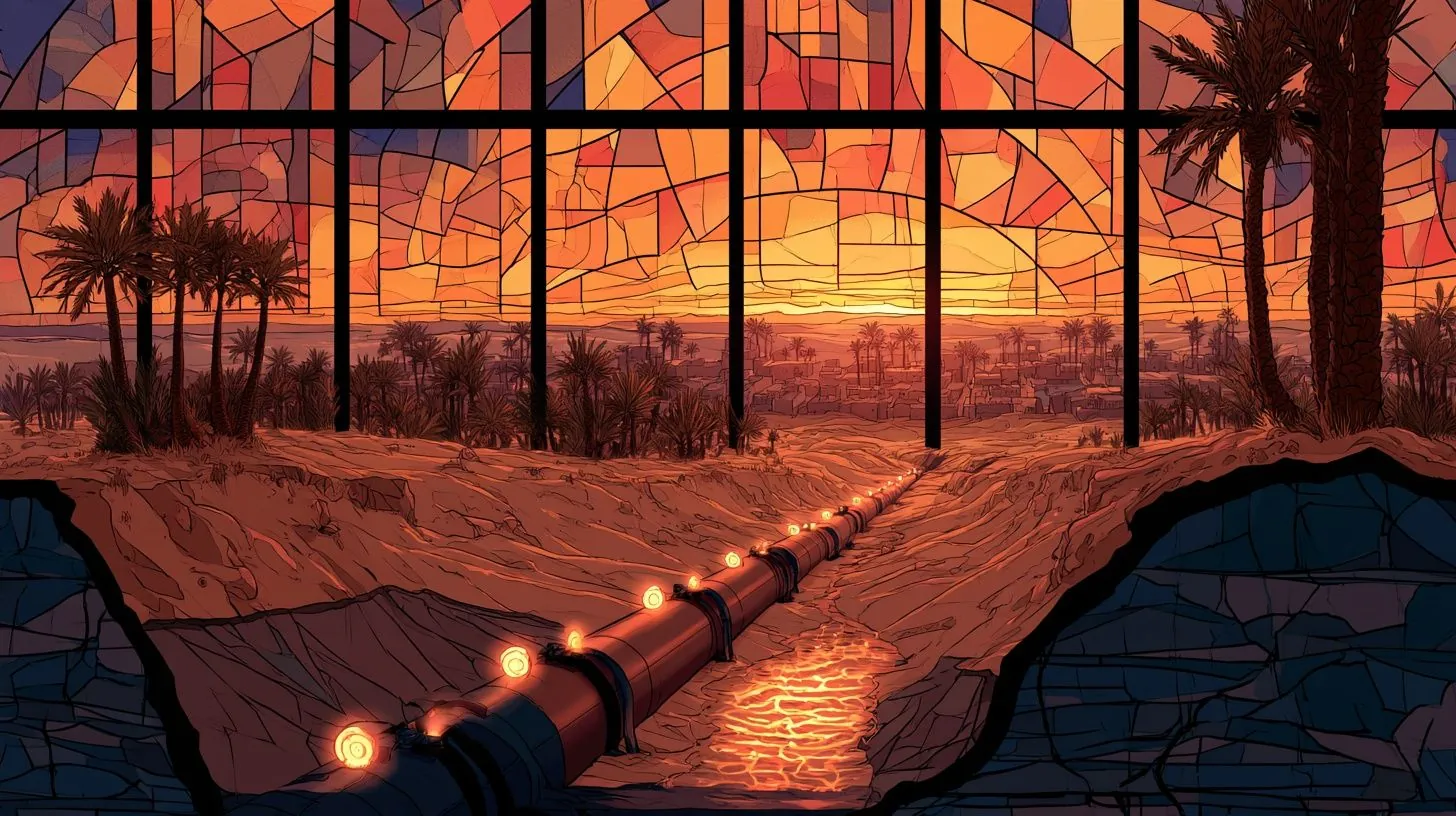
The Aqaba-Amman water project will listen for leaks with fiber optic sensing along its whole buried pipeline, watched from a control center at the desalination plant. In a country that still loses 41% of the water it pumps to leaks, theft and faulty meters, every cubic meter carried up from Aqaba is worth protecting.
Sensors collect the facts, artificial intelligence decides what they mean, and robots and drones go where the sensors point. A pipeline of this length, with its pumping stations and its solar plant, is exactly the kind of asset where the three meet, and the guide’s hardware and software parts show how they join into one system.
When will the water flow?
The ministry says building starts on January 7, 2027, and building takes about four years. Water pumping is expected by the end of 2030, when desalinated Red Sea water from Aqaba is due to reach Amman.
The Aqaba-Amman guide is the first of the project guides, a new collection on www.JordanPPP.com beside the organization guides and the sector guides. Read it, download it and share it with the people in your organization who will build the next one.