Need for spppeed
Technology now changes in months while a PPP still takes years, and the public bodies, companies and banks in Jordan that learn to move at the new speed will lead its next century of infrastructure.
Jordan needs speed because the singularity is making technology change in months, while a PPP still takes about seven years to reach financial close. In Jordan and Aqaba, the public bodies, companies and banks that adapt best to this new pace will be the ones that move fastest, and Jordan has $86 billion of PPP and infrastructure projects to move on, $46 billion of them anchored in Aqaba.
How fast is technology changing?
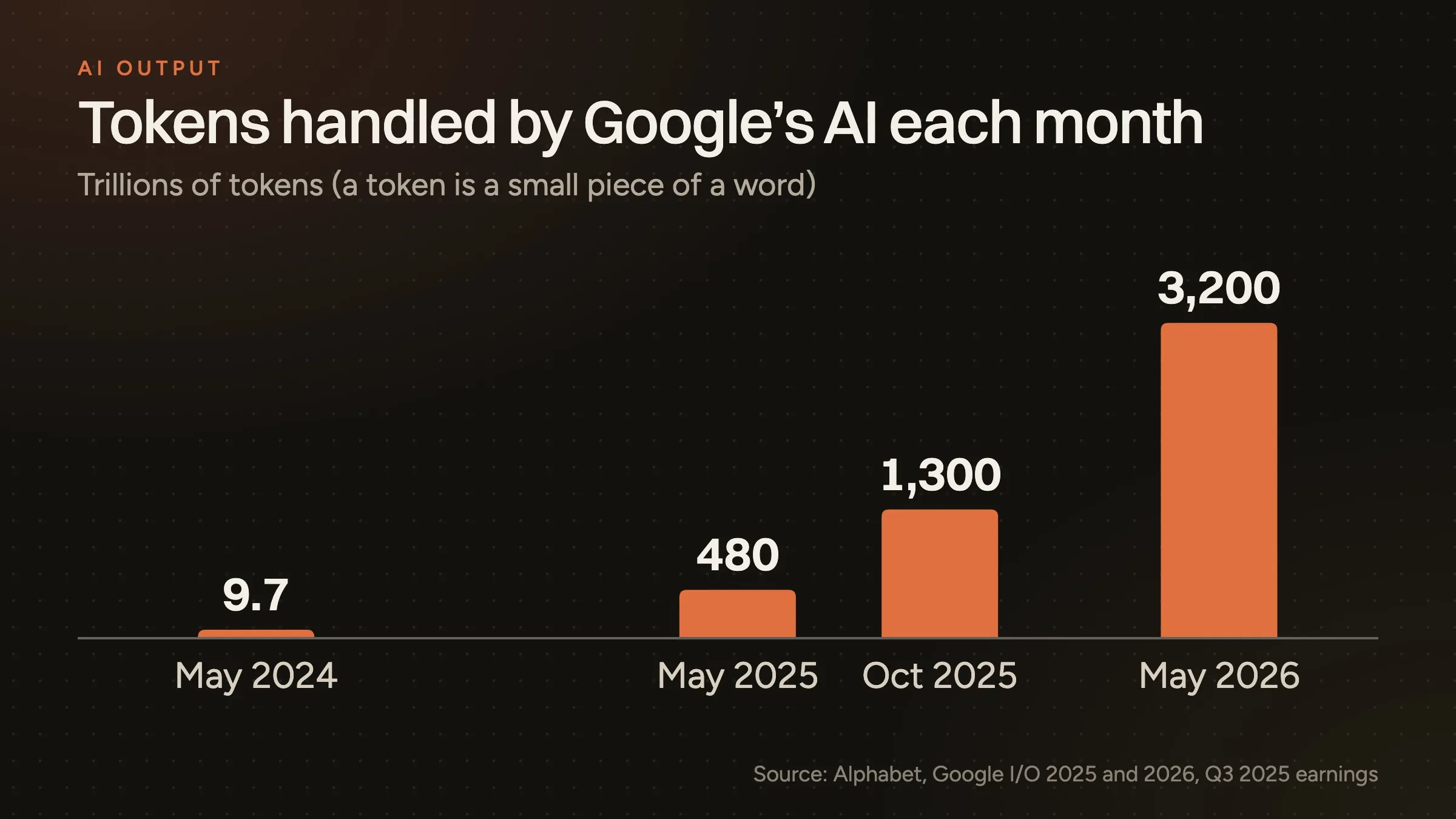
Technology is changing faster than ever, and Jordan feels it in every sector, from water and power to schools and ports. Google’s AI handled 9.7 trillion tokens a month in May 2024 and 3,200 trillion in May 2026, more than 300 times as much in two years. A token is a small piece of a word.
If it keeps that pace, Google’s AI by itself will pass a thousand Internets a day around 2030, and every other AI company adds its own on top. Machines follow similar curves. Solar panel prices have fallen by around 20% every time the world’s total capacity doubled, a pattern known as Wright’s Law, so power from the sun gets cheaper the more of it the world builds.
These curves feed each other. Cheaper solar power runs more data centers, more data centers train better AI, and better AI designs the machines that build the next solar farm. Demand for power, water and data is rising faster than public budgets and planning teams can move, and Jordan, where water is scarce and most electricity still comes from gas, feels that pressure early.
What is the singularity, and why does it speed up change?
The infrastructure singularity is the point where the built world starts improving itself faster than anyone can direct it. In Jordan, it arrives as artificial intelligence designs and runs the assets, robotics builds and maintains them, and tokenization finances them and opens their ownership to everyone.
Each pass through the loop of build, measure, fix and repeat produces data that makes the next pass faster and cheaper, so change speeds up the longer the loop runs. As AI moves toward superintelligence, that system will learn faster than any human team, and the PPP singularity arrives when it becomes cheaper to build the pilot than to conduct the study.
AI shortens the measuring, robotics shortens the building and tokenization shortens the funding, so the loop of build, measure, fix and repeat runs faster at every size of the pyramid.
Why do those who adapt best move fastest?
In Jordan, the organizations that adapt best to the singularity will be those that try, learn and improve fastest. Each project adds contracts, data and trained staff that make the next one faster, so a team that finishes ten projects a year learns far more than a team that finishes one, and the gap grows every year.
The usual pace is slow. The World Bank counted 315 private infrastructure projects reaching financial close across all low and middle income countries in 2024, only a few per country. On a large project, design takes about 12 months, construction about 36 months and operation 20 years, so each lesson takes years to arrive.
A nano PPP, the size of a tank sensor or solar panels for one school, can be built in weeks. A team working with small projects can go around the build, measure and fix loop dozens of times while a single mega project is still being designed and built, and the PPP pyramid shows how those lessons climb to the largest projects.
How can PPPs in Jordan move faster?
A PPP takes about seven years and around 10% of its capital cost to reach financial close, and most of that time and money goes into documents, models and negotiation. Jordan can cut that time with the same technologies that are speeding up the world, and with the fast routes already written into its PPP law.
- 01Prepare with AI: AI tools draft feasibility studies, environmental and social reviews, financial models and contracts, and test and compare them in days, so preparation that took years can be done in months.
- 02Build with robots: Robotics and factory-made parts install modular classrooms and clinics within weeks, and machines that work through the night and in dangerous heat help projects finish faster and cost less.
- 03Fund with tokens: Tokenized notes let a few hundred investors fund a pilot beside the banks and let firms recycle their equity into the next projects faster.
- 04Start small: PPP Regulation No. 9 of 2024 defines small PPPs below $14.1 million, which can be bundled into one feasibility report and one tender under simpler procedures.
- 05Propose directly: Article 15 of PPP Law No. 19 of 2023 accepts direct private proposals, so a company can take a pilot to government without waiting for a tender to be called.
How can Jordan’s public sector move at the new speed?
Jordan’s public sector can move at the new speed by running many small projects at once and sharing what each one teaches. A ministry, municipality or authority that tenders dozens of small pilots a year learns faster than one that waits years for a single large contract, and every result it publishes helps the next public body move faster.
780
small PPPs a year that 1% of the budgets of 40 contracting authorities in Jordan could fund, at $100,000 each
Slow preparation has a cost. Studies sit on shelves, tenders are repeated and investors move their money to markets that answer faster. A government-wide fast track can give small-scale PPPs standard documents and agreed timelines in every ministry, and AI tools let a ministry study more options before it chooses one. The ministries guideDownload the guide shows how a ministry can set one up.
How can Jordan’s private sector move at the new speed?
Jordan’s private sector can move at the new speed by building AI, robotics and tokenization into every bid and by bringing its own ideas to government. A developer that prepares feasibility studies, financial models and bid documents with AI spends less on each bid, moves faster to financial close and can pursue more of the $86 billion pipeline with the same team.
Banks and investors can keep pace too. A bank that pairs the judgment of its people with these tools can lend faster and lose less, and it can pass those savings to the projects it finances in Jordan and Aqaba. A program inside each company, with one team and standard documents, makes each new project faster and cheaper than the last. The PPP developers guideDownload the guide and the banks guideDownload the guide describe both.
Why can Aqaba move fastest?
Aqaba can move fastest because it already holds $46 billion of Jordan’s PPP and infrastructure projects, the country’s largest data center open to all carriers and serviced plots for new districts, all in one city on the Red Sea. Its pipeline is moving from paper to contracts at a pace other cities in the region can learn from.
$46B
of Jordan’s $86 billion of PPP and infrastructure projects anchored in Aqaba
The pace is already visible. The Aqaba-Amman water project, the world’s largest PPP of 2026, reached financial close on November 19, 2026. Building starts on January 7, 2027 and takes about four years, and the carrier will pump about 300 million cubic meters of drinking water a year about 417 km from Aqaba to Amman, with first water due by the end of 2030. For the Jordan Green Ammonia plant at the Port of Aqaba, the investment agreement was signed in May 2026 and a land lease with ASEZA followed in June.
Aqaba can also test new technology quickly. A research lab set up with ASEZA and a university could test electrolyzers on desalinated seawater, desert heat and dust, starting with three $100,000 pilots, as the hydrogen sector guide describes. The Aqaba guideDownload the guide shows how the city’s public bodies and companies can take part.
Where can an organization in Jordan start?
Any organization in Jordan can start by choosing one small project this year and building it in weeks. A ministry can bundle its small projects into one tender, a company can bring a pilot under Article 15, a bank can fund a set of $100,000 pilots, and a university can train the people who will run them. The free organization guides and the opportunity page list the projects across Jordan and Aqaba.