
What this guide is for
Your firm launches a PPP capital markets program that arranges, lists, distributes and trades the bonds, sukuk and tokenized notes of public-private partnership (PPP) projects on the Amman Stock Exchange and beyond.
The case
Brokers and investment banks turn PPP assets into securities
Infrastructure has been financed mostly by bank loans held to maturity, and few investors have ever owned a piece of the roads, plants and networks they use. The projects of the next fifty years will be refinanced through bonds, sukuk and tokenized notes that trade every day, and the firms that arrange, research and make markets in them will earn from them for decades. This guide invites brokerage firms and investment banks in Jordan to launch a PPP capital markets program, starting with the projects at home.
The guide
Bring the $500 trillion PPP infrastructure opportunity to market
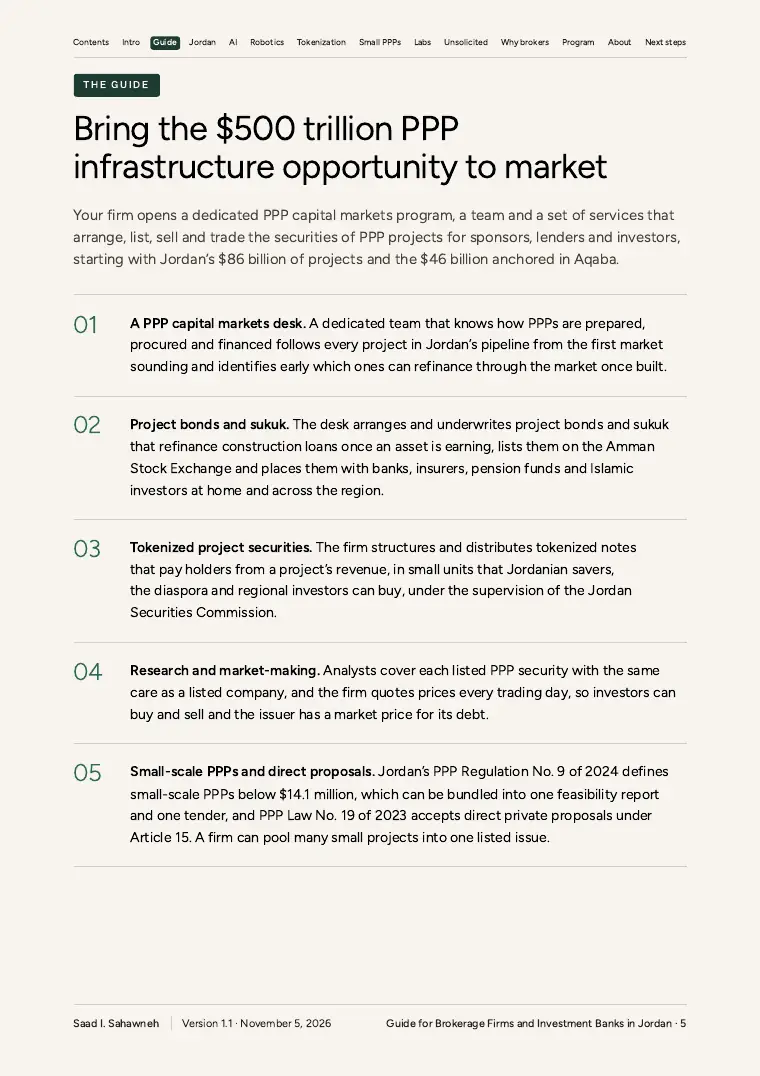
Your firm opens a dedicated PPP capital markets program, a team and a set of services that arrange, list, sell and trade the securities of PPP projects for sponsors, lenders and investors, starting with Jordan’s $86 billion of projects and the $46 billion anchored in Aqaba.
01
A PPP capital markets desk
A dedicated team that knows how PPPs are prepared, procured and financed follows every project in Jordan’s pipeline from the first market sounding and plans, early, which ones can refinance through the market once they are built.
02
Project bonds and sukuk
The desk arranges and underwrites project bonds and sukuk that refinance construction loans once an asset is earning, lists them on the Amman Stock Exchange and places them with banks, insurers, pension funds and Islamic investors at home and across the region.
03
Tokenized project securities
The firm structures and distributes tokenized notes that pay holders from a project’s revenue, in small units that Jordanian savers, the diaspora and regional investors can buy, under the supervision of the Jordan Securities Commission.
04
Research and market-making
Analysts cover each listed PPP security with the same care as a listed company, and the firm quotes prices every trading day, so investors can buy and sell and the issuer has a market price for its debt.
05
Small-scale PPPs and direct proposals
Jordan’s PPP Regulation No. 9 of 2024 defines small-scale PPPs below $14.1 million, which can be bundled into one feasibility report and one tender, and PPP Law No. 19 of 2023 accepts direct private proposals under Article 15. A firm can pool many small projects into one listed issue.
Why brokerage firms and investment banks
Brokers and investment banks turn PPP assets into securities
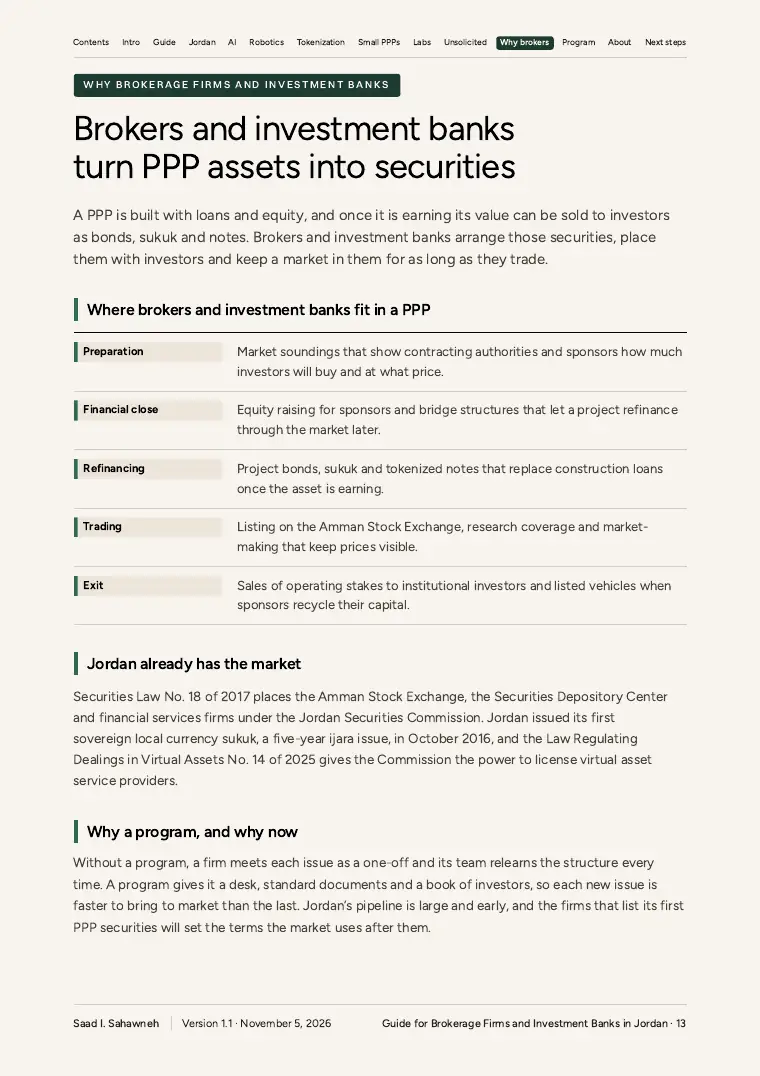
A PPP is built with loans and equity, and once it is earning its value can be sold to investors as bonds, sukuk and notes. Brokers and investment banks arrange those securities, place them with investors and keep a market in them for as long as they trade.
Where brokers and investment banks fit in a PPP
- Preparation
- Market soundings that show contracting authorities and sponsors how much investors will buy and at what price.
- Financial close
- Equity raising for sponsors and bridge structures that let a project refinance through the market later.
- Refinancing
- Project bonds, sukuk and tokenized notes that replace construction loans once the asset is earning.
- Trading
- Listing on the Amman Stock Exchange, research coverage and market-making that keep prices visible.
- Exit
- Sales of operating stakes to institutional investors and listed vehicles when sponsors recycle their capital.
Jordan already has the market
Securities Law No. 18 of 2017 places the Amman Stock Exchange, the Securities Depository Center and financial services firms under the Jordan Securities Commission. Jordan issued its first sovereign local currency sukuk, a five-year ijara issue, in October 2016, and the Law Regulating Dealings in Virtual Assets No. 14 of 2025 gives the Commission the power to license virtual asset service providers.
Why a program, and why now
Without a program, a firm meets each issue as a one-off and its team relearns the structure every time. A program gives it a desk, standard documents and a book of investors, so each new issue is faster to bring to market than the last. Jordan’s pipeline is large and early, and the firms that list its first PPP securities will set the terms the market uses after them.

Futureproofing
Futureproof Brokerage Firms and Investment Banks in Jordan for the infrastructure singularity
This free 17-page guide shows how, with small PPPs in parallel, PPP research labs, artificial intelligence, robotics, tokenization and six first steps.
Jordan and Aqaba
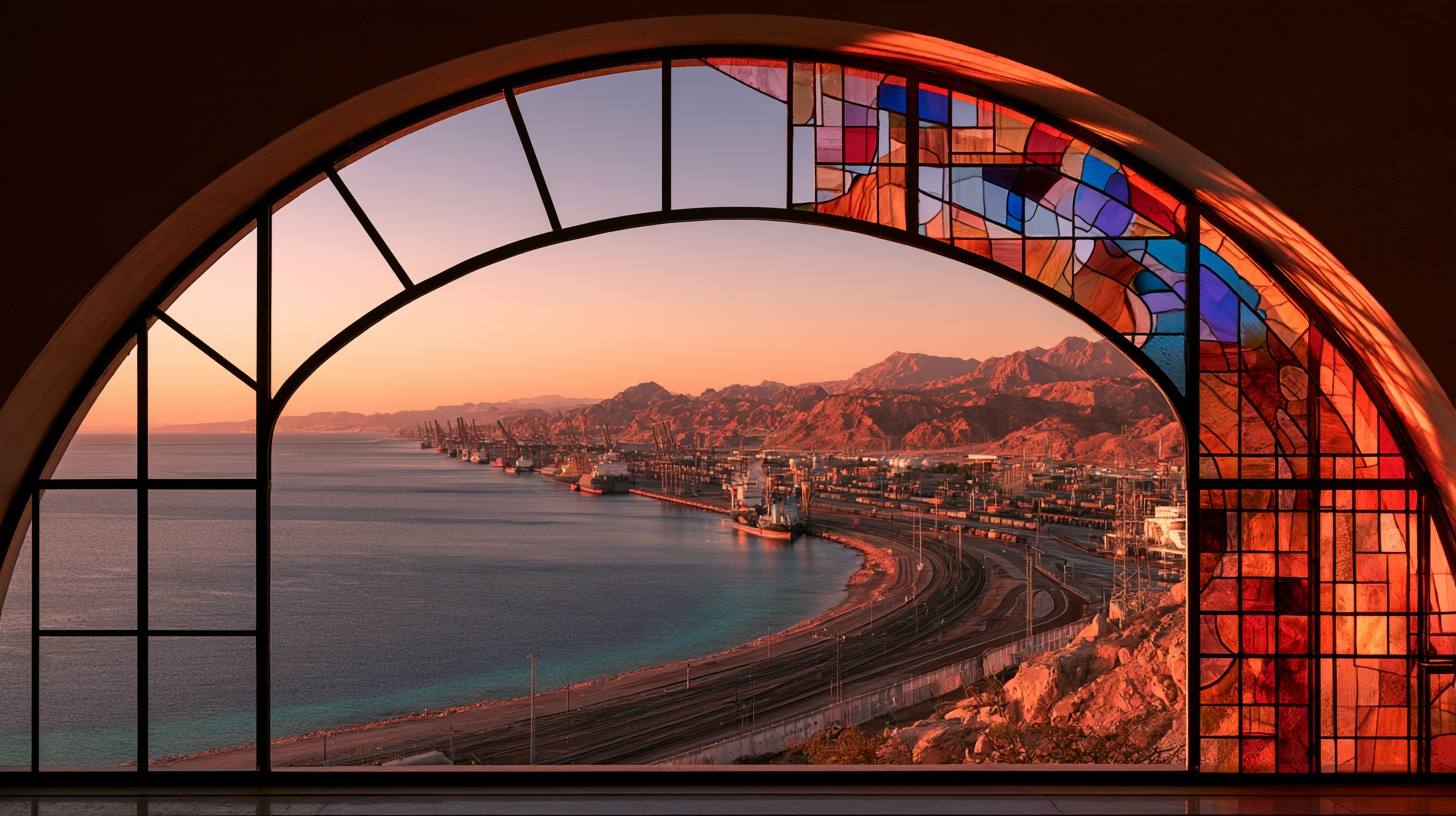
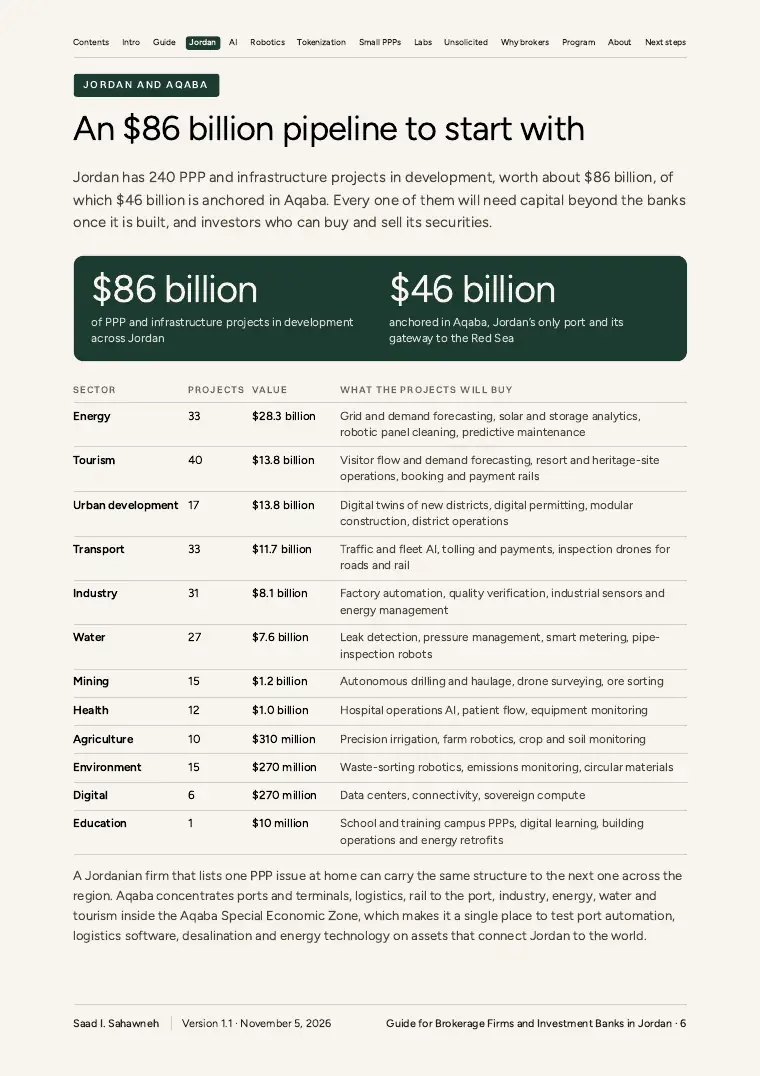
An $86 billion pipeline to start with
Every one of them will need capital beyond the banks once it is built, and investors who can buy and sell its securities. A Jordanian firm that lists one PPP issue at home can carry the same structure to the next one across the region.
- $86B
- of PPP and infrastructure projects in development in Jordan
- $46B
- of them anchored in Aqaba

Artificial intelligence
AI lets a firm research a PPP security as closely as the team that built the asset. Analysts can read a concession agreement, test a financial model and track traffic, tariffs and availability in real time, and pricing models can quote fair values for thinly traded issues every day. A firm that builds these tools can cover more issues with the same team.

Robotics
Robotics changes the risk inside every PPP security. Projects built with automated construction finish closer to schedule, and assets inspected by drones and maintained by robots fail less often, which narrows the spread investors ask for. A firm that understands the technology can explain those savings to investors and price the first robotic projects in the region with confidence.

Tokenization
Tokenization turns a project security into something many investors can hold. A firm can structure a tokenized note, sell it in small units through its own brokerage channels, pay holders from the project’s revenue through smart contracts and run a secondary market where investors trade between payment dates.

Small PPPs and research labs
Small PPPs are too small to list one by one, and a firm can pool them. A pooled issue backed by many lab pilots gives investors a spread of small projects with similar contracts, and it gives the firm a track record in PPP securities before the large concessions come to market.

Unsolicited proposals
Every direct proposal under Article 15 has to show how it will be financed, and a market for its securities makes that case stronger. A firm that sounds out investors for a proposer’s project brings a funding route to the table at the first stage, and it is the natural arranger when the project reaches the market.
The program
How the program could work
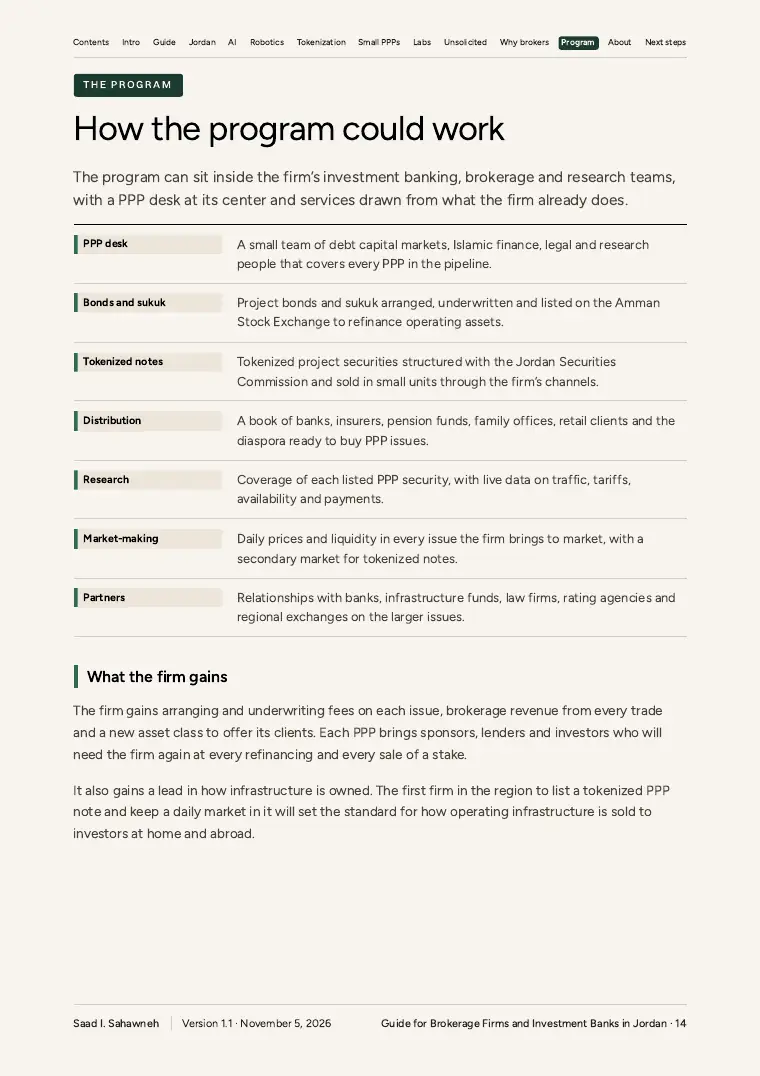
The program can sit inside the firm’s investment banking, brokerage and research teams, with a PPP desk at its center and services drawn from what the firm already does.
- PPP desk
- A small team of debt capital markets, Islamic finance, legal and research people that covers every PPP in the pipeline.
- Bonds and sukuk
- Project bonds and sukuk arranged, underwritten and listed on the Amman Stock Exchange to refinance operating assets.
- Tokenized notes
- Tokenized project securities structured with the Jordan Securities Commission and sold in small units through the firm’s channels.
- Distribution
- A book of banks, insurers, pension funds, family offices, retail clients and the diaspora ready to buy PPP issues.
- Research
- Coverage of each listed PPP security, with live data on traffic, tariffs, availability and payments.
- Market-making
- Daily prices and liquidity in every issue the firm brings to market, with a secondary market for tokenized notes.
- Partners
- Relationships with banks, infrastructure funds, law firms, rating agencies and regional exchanges on the larger issues.
What the firm gains
The firm gains arranging and underwriting fees on each issue, brokerage revenue from every trade and a new asset class to offer its clients. Each PPP brings sponsors, lenders and investors who will need the firm again at every refinancing and every sale of a stake.
It also gains a lead in how infrastructure is owned. The first firm in the region to list a tokenized PPP note and keep a daily market in it will set the standard for how operating infrastructure is sold to investors at home and abroad.

Next steps
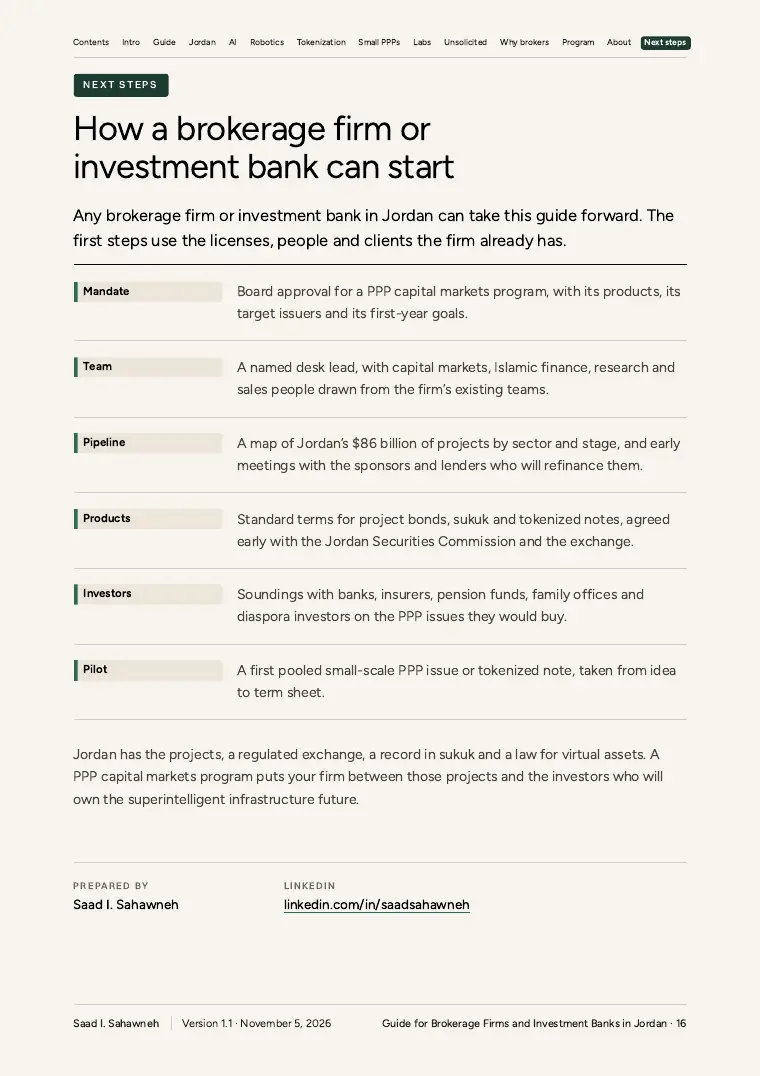
How a brokerage firm or investment bank can start
Any brokerage firm or investment bank in Jordan can take this guide forward. The first steps use the licenses, people and clients the firm already has.
01
Mandate
Board approval for a PPP capital markets program, with its products, its target issuers and its first-year goals.
02
Team
A named desk lead, with capital markets, Islamic finance, research and sales people drawn from the firm’s existing teams.
03
Pipeline
A map of Jordan’s $86 billion of projects by sector and stage, and early meetings with the sponsors and lenders who will refinance them.
04
Products
Standard terms for project bonds, sukuk and tokenized notes, agreed early with the Jordan Securities Commission and the exchange.
05
Investors
Soundings with banks, insurers, pension funds, family offices and diaspora investors on the PPP issues they would buy.
06
Pilot
A first pooled small-scale PPP issue or tokenized note, taken from idea to term sheet.
Jordan has the projects, a regulated exchange, a record in sukuk and a law for virtual assets. A PPP capital markets program puts your firm between those projects and the investors who will own the superintelligent infrastructure future.
The full document
Inside this guide
Seventeen pages and thirteen chapters, from the case for a PPP program to the first steps, written for brokerage firms and investment banks in Jordan.
- 17
- pages
- 13
- chapters
- 3
- technologies
- 6
- first steps
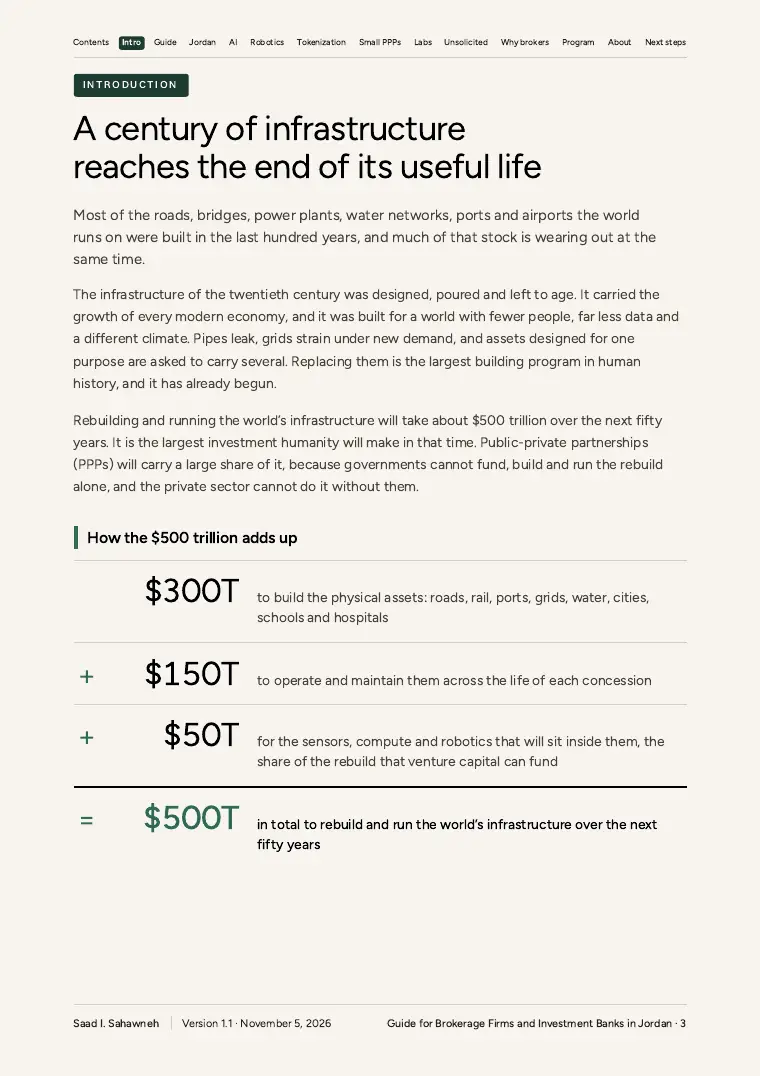
01Introduction
Why a century of infrastructure needs rebuilding, and the $500 trillion it will take.
Page 3 of 17
02The guide
Bring the $500 trillion PPP infrastructure opportunity to market
Page 5 of 17
03Jordan and Aqaba
An $86 billion pipeline to start with
Page 6 of 17
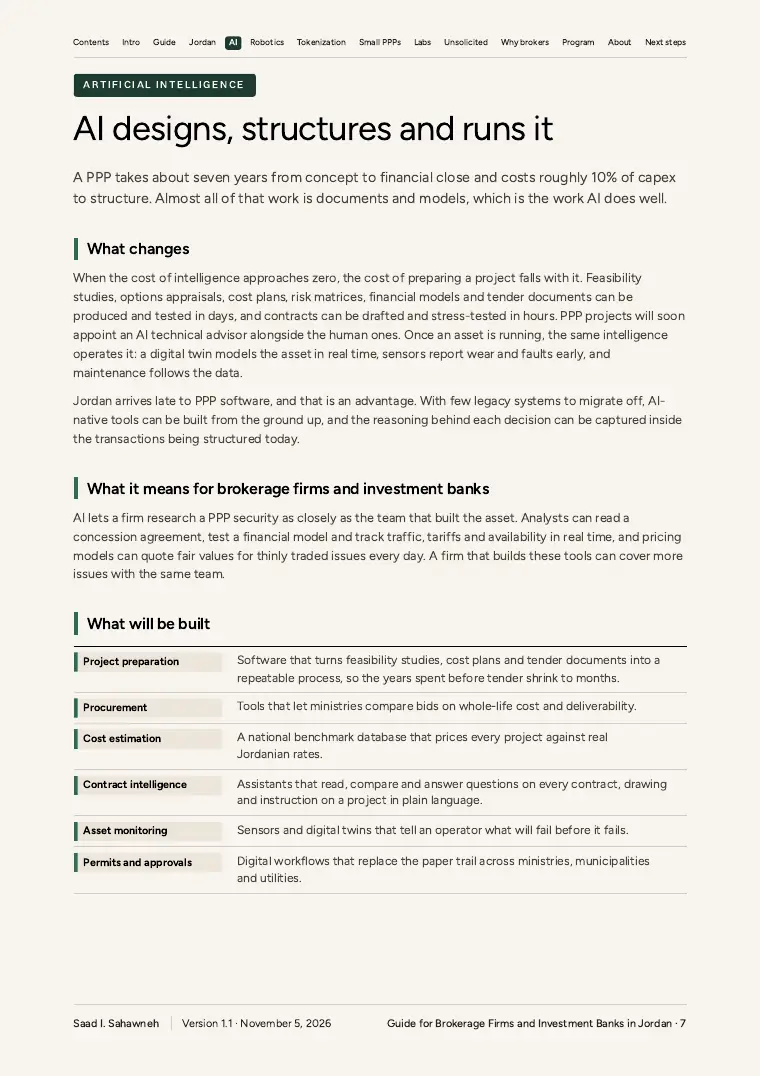
04Artificial intelligence
How AI designs, structures and runs PPP projects, and what it means for brokerage firms and investment banks.
Page 7 of 17
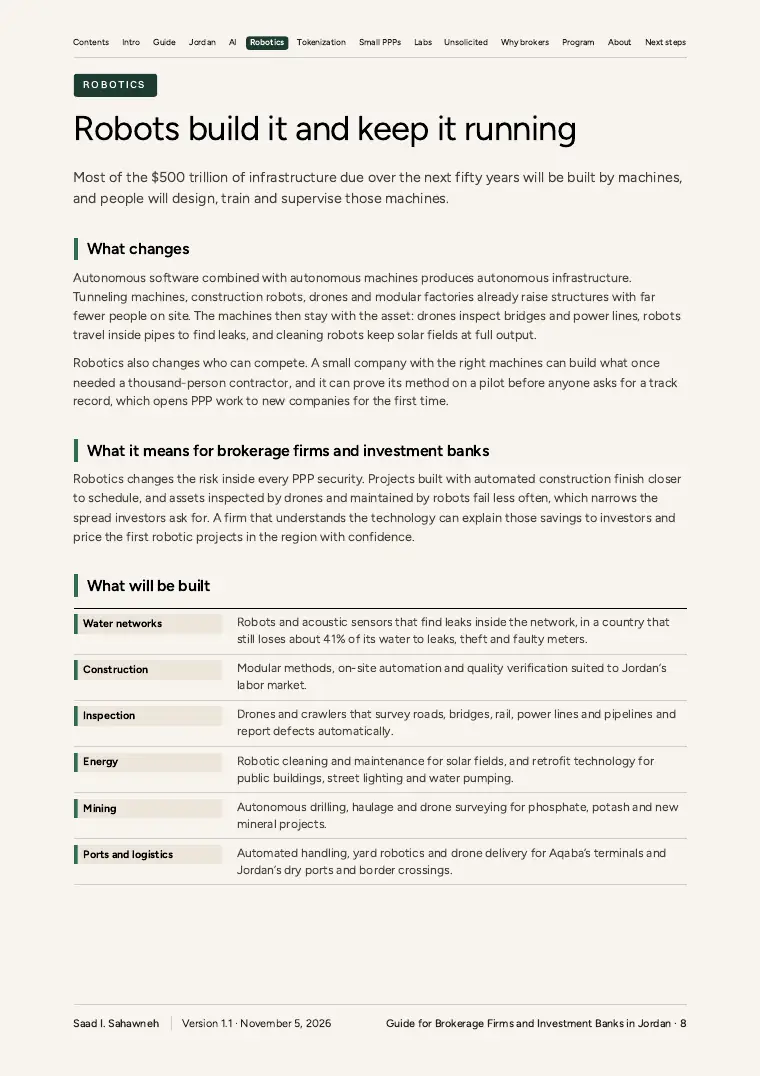
05Robotics
How robots build infrastructure and keep it running, and what that means for brokerage firms and investment banks.
Page 8 of 17
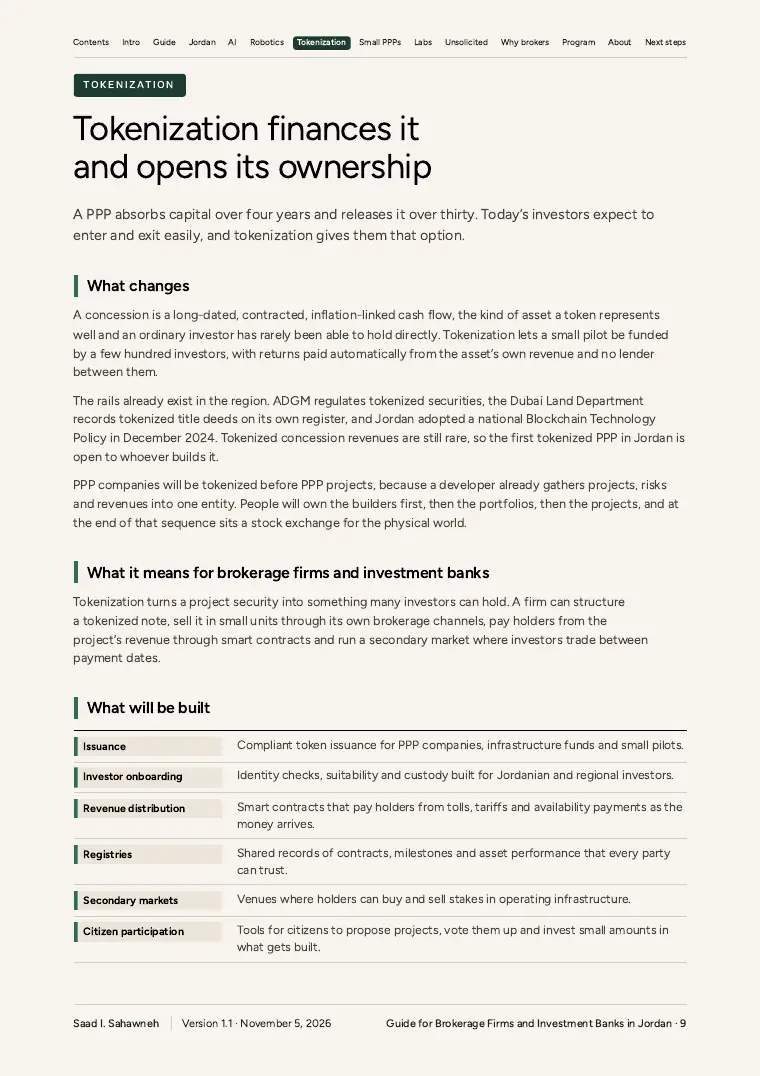
06Tokenization
How tokenization funds projects from their own revenue, and the role it opens for brokerage firms and investment banks.
Page 9 of 17
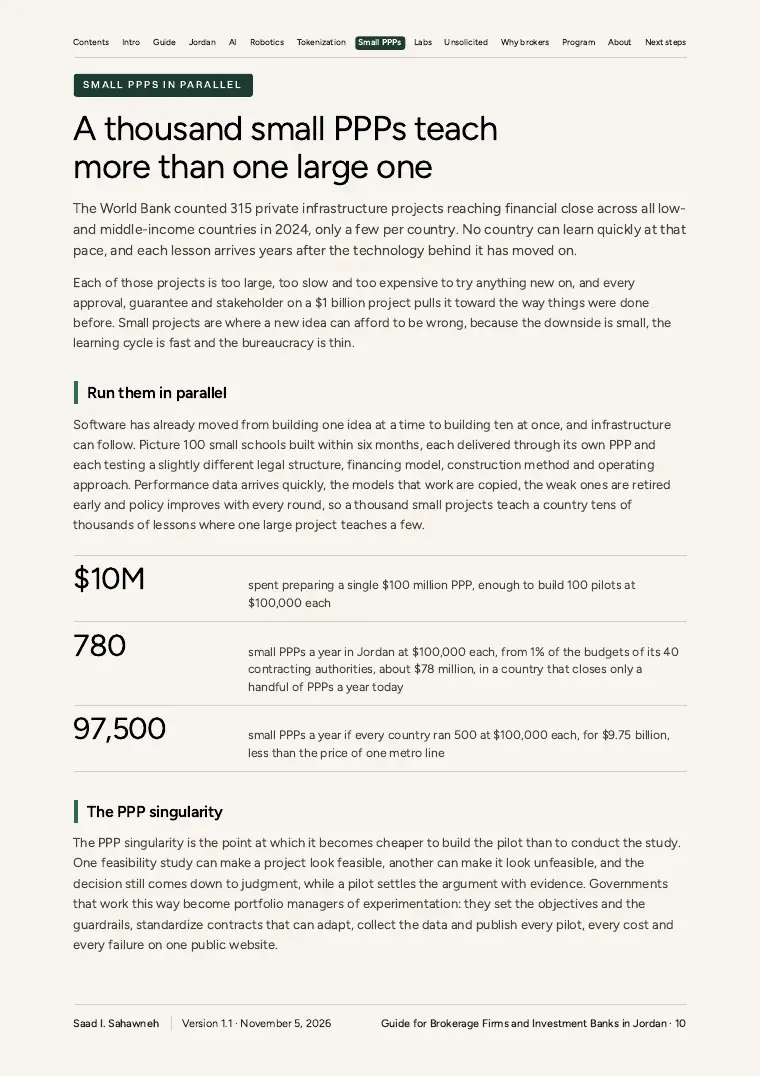
07Small PPPs in parallel
Why many small PPPs teach a country faster than a few large ones.
Page 10 of 17
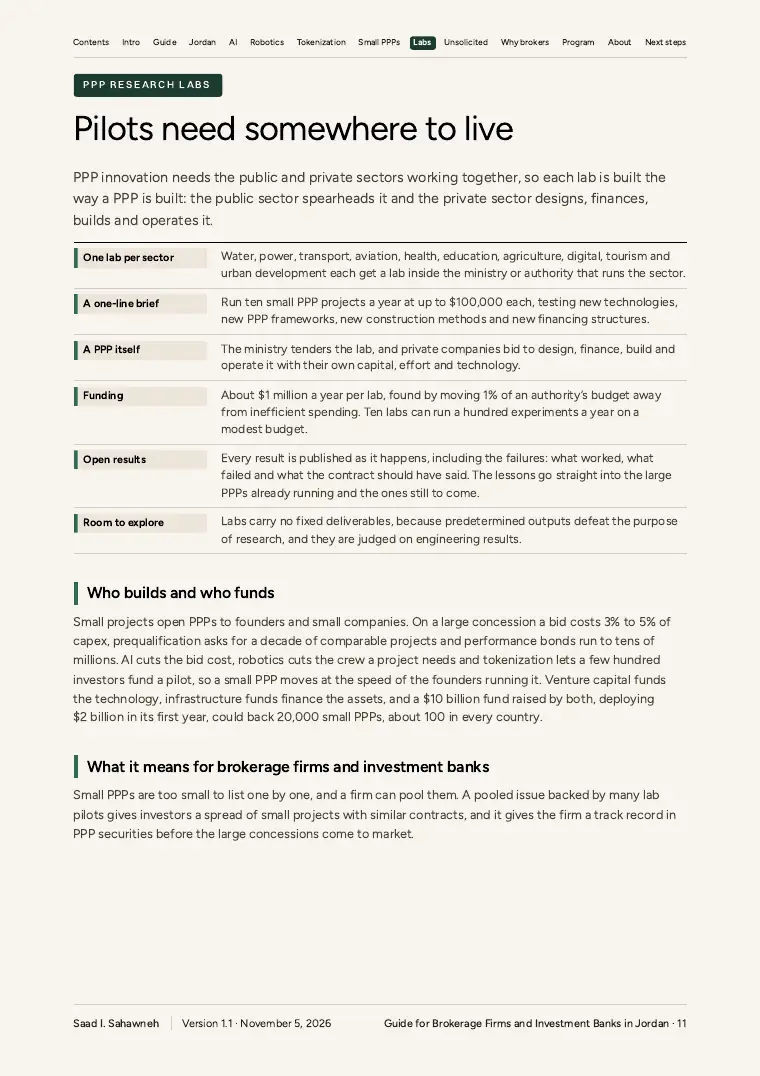
08PPP research labs
A lab in each sector, running ten small PPP projects a year.
Page 11 of 17
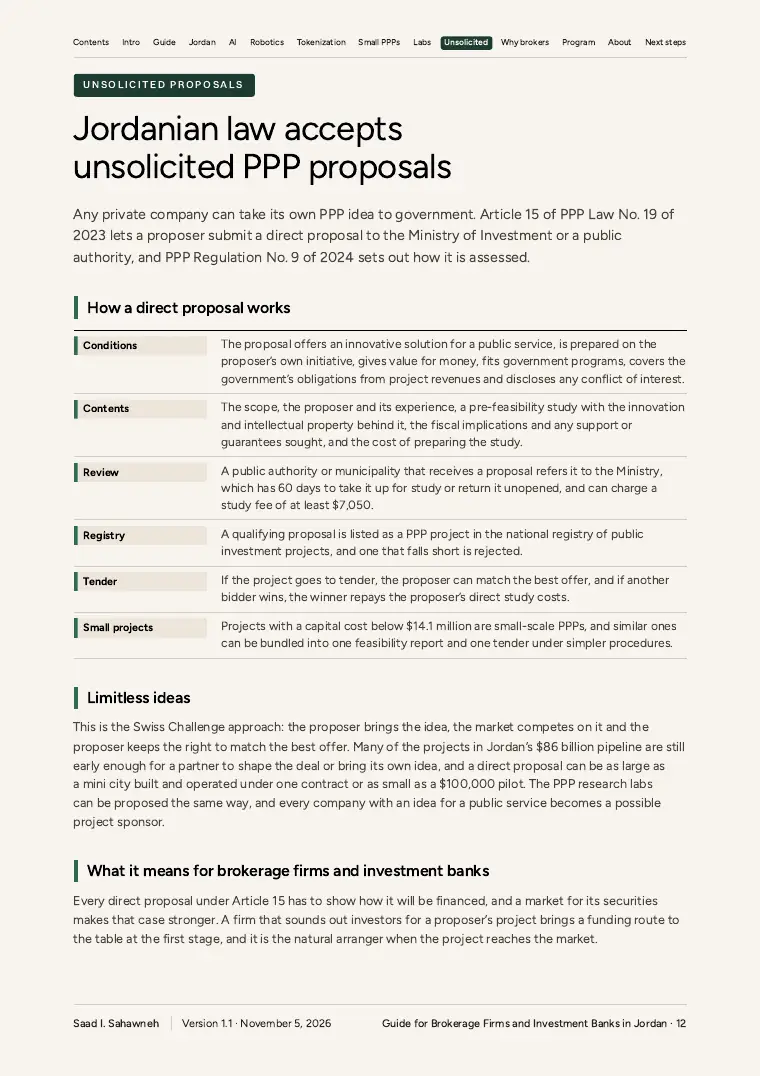
09Unsolicited proposals
How Jordan’s PPP law accepts direct proposals from private companies.
Page 12 of 17
10Why brokerage firms and investment banks
Brokers and investment banks turn PPP assets into securities
Page 13 of 17
11The program
The program can sit inside the firm’s investment banking, brokerage and research teams, with a PPP desk at its center and services drawn from what the firm already does.
Page 14 of 17
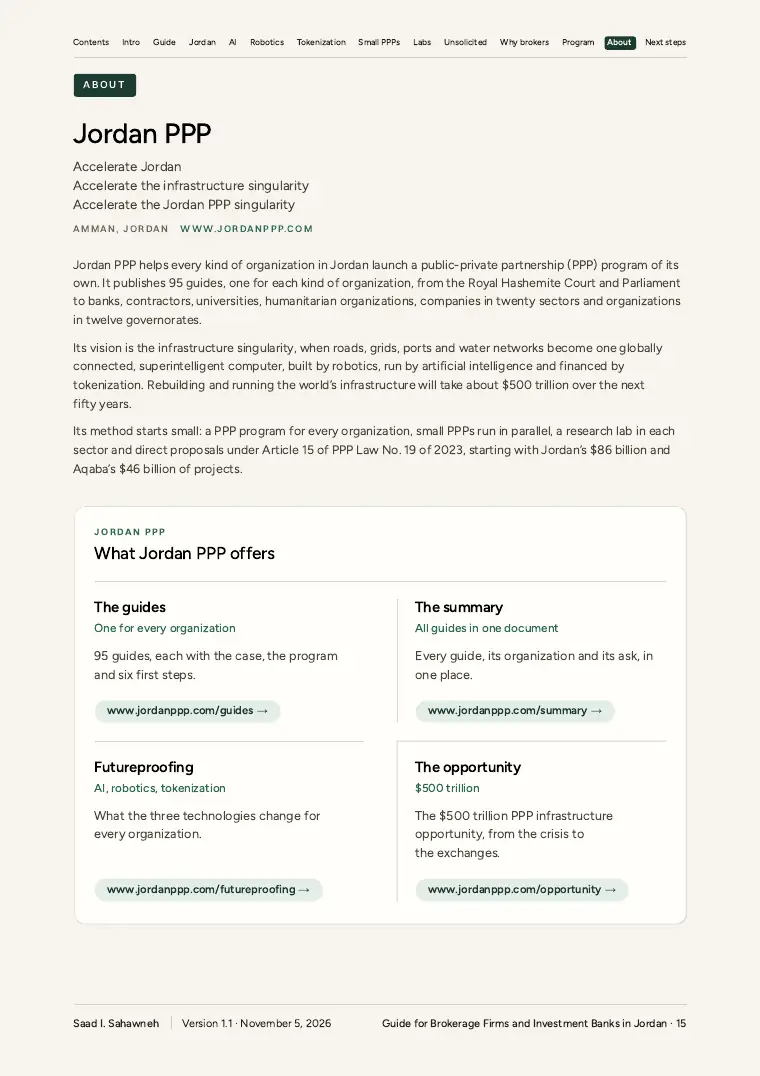
12About
About Jordan PPP and what it offers.
Page 15 of 17
13Next steps
How a brokerage firm or investment bank can start: six first steps.
Page 16 of 17
Questions
Questions about the guide for Brokerage Firms and Investment Banks in Jordan
- What does the guide for Brokerage Firms and Investment Banks in Jordan propose?
- Your firm launches a PPP capital markets program that arranges, lists, distributes and trades the bonds, sukuk and tokenized notes of public-private partnership (PPP) projects on the Amman Stock Exchange and beyond.
- Why should brokerage firms and investment banks in Jordan launch a PPP program?
- Brokers and investment banks turn PPP assets into securities. A PPP is built with loans and equity, and once it is earning its value can be sold to investors as bonds, sukuk and notes. Brokers and investment banks arrange those securities, place them with investors and keep a market in them for as long as they trade.
- Which PPP projects can brokerage firms and investment banks in Jordan take part in?
- Jordan has about $86 billion of PPP and infrastructure projects in development, $46 billion of them anchored in Aqaba. Every one of them will need capital beyond the banks once it is built, and investors who can buy and sell its securities. A Jordanian firm that lists one PPP issue at home can carry the same structure to the next one across the region.
- How can brokerage firms and investment banks in Jordan start a PPP program?
- Any brokerage firm or investment bank in Jordan can take this guide forward. The first steps use the licenses, people and clients the firm already has. The guide sets out six first steps: mandate, team, pipeline, products, investors and pilot.
- What does a PPP program give brokerage firms and investment banks in Jordan?
- The firm gains arranging and underwriting fees on each issue, brokerage revenue from every trade and a new asset class to offer its clients. Each PPP brings sponsors, lenders and investors who will need the firm again at every refinancing and every sale of a stake.
- Is the guide for Brokerage Firms and Investment Banks in Jordan free?
- Yes. It is free to read on this page and free to download as a 17-page PDF, with the case for a PPP program, Jordan’s pipeline, the role of AI, robotics and tokenization, the program and six first steps.
Guide 25 of 95
Browse all 95 guides